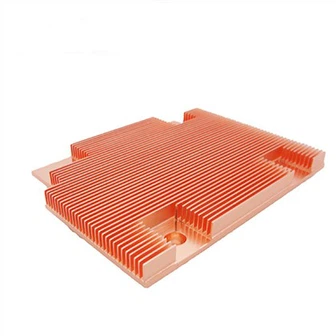
Choosing the right heat sink to handle your inverter's thermal issues
Inverters have become an integral component of modern electronics, used in everything from home appliances to industrial machinery. Their purpose is to convert DC electricity into AC electricity, which powers most devices that we use every day. However, since inverters generate heat during operation, they are at risk of malfunctioning or failing if not regulated effectively. This article discusses the importance of selecting the appropriate heat sink to manage your inverter's thermal issues.
What is a heat sink?
A heat sink is a mechanism that attaches to the inverter to disperse the heat produced during operation. The heat sink's function is to transfer the heat generated by the inverter to the surrounding air, preventing it from overheating. Heat sinks come in various shapes and sizes, and their effectiveness is judged by their material and size.

Factors to consider when selecting a heat sink
Choosing the right heat sink requires taking several factors into consideration to ensure that it fits your inverter's specifications properly.
These factors include:
1. Inverter power rating: The heat generated during operation is determined by the inverter's power rating. A higher power rating requires a larger heat sink to disperse the heat more efficiently.
2. Ambient temperature: The heat sink's performance can be influenced by the environment the inverter operates in. If it is hot, the heat sink must be more effective to prevent overheating.
3. Type of enclosure: The enclosure of the inverter can affect the performance of the heat sink. A tightly enclosed inverter needs a more efficient heat sink to disperse heat generated appropriately.
4. Airflow: The inverter's airflow can affect the heat sink's performance. If the airflow is limited, the heat sink must be more effective to disperse the heat efficiently.
Choosing the ideal heat sink
Selecting the ideal heat sink may seem challenging, particularly if you are unfamiliar with heat sink technical specifications. However, there are a few things to consider when selecting a heat sink to ensure that it is suitable for your inverter.
1. Material: The material used in constructing the heat sink determines its thermal conductivity. Copper and aluminum are the most commonly employed materials utilized in developing heat sinks, with copper being the more efficient of the two.
2. Size: The size of the heat sink affects its heat-dispersing capacity. A larger heat sink provides better results than a smaller one, but it must be proportional to the inverter's power rating.
3. Thermal resistance: The heat sink's thermal resistance influences its heat-dispersal efficiency. A lower thermal resistance indicates that the heat sink is more efficient.
4. Fin density: The heat sink's fin density influences its ability to distribute heat. A higher fin density implies more surface area, allowing for more effective heat dispersion.
Sinda Thermal is a leading thermal manufacturer in China, our factory was founded in 2014, and located in Dongguan city, China, we are offering varieties of heatsinks and other precious metal parts. Our plant possesses 30 sets advanced and high precious CNC machines and stamping machines, also we have many testing and experiment instruments and professional engineering team, so our company can manufacture and provide high quality products with high precision and excellent thermal performance. Sinda Thermal is commited to a range of heat sinks which are widely used in new power supply, New energy vehicles, Telecommunications, Servers, IGBT, and Madical. All the products accord with Rohs/Reach standard, and the factory is qualified by ISO9001 and ISO14001. Our company has been a partner with many customers for good quality, excellent service and competitive price. Sinda Thermal is a great heat sink manufacturer for the global customers .