Copper Heatpipe basic knowledge
The heat pipe is a kind of heat transfer element, which makes full use of the heat conduction principle and the fast heat transfer property of the cooling medium. The heat of the hot object is quickly transferred to the outside of the heat source through the heat pipe, and its thermal conductivity has far exceeded that of any known metal.

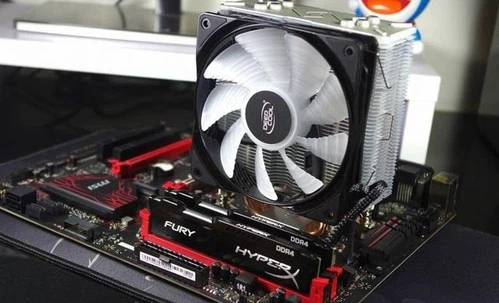
Because of the existence of heat pipe technology that people have changed the design idea of the traditional heatsink and got rid of the traditional cooling mode of simply relying on large air volume fans to achieve better cooling effect. Instead, a new cooling mode with low speed, low air volume fan and heat pipe technology is adopted. Heat pipe technology brings an opportunity for the silent era of PC.
Working Principle:
When one end of the heat pipe is heated, the liquid in the capillary core evaporates and vaporizes, and the steam flows to the other end under a small pressure difference to release heat and condense into a liquid. The liquid then flows back to the evaporation section along the porous material under the action of capillary force (or gravity). In this cycle, the heat is transferred from one end to the other.

Benefits and Advantages:
1. The high thermal conductivity , mainly relies on the vapor-liquid phase change heat transfer of the working liquid, and the thermal resistance is very small, so it has high thermal conductivity.
2. Excellent isothermal property The steam in the inner cavity of the heat pipe is in a saturated state, and the pressure of the saturated steam depends on the saturation temperature. The pressure drop of the saturated steam from the evaporation section to the condensation section is very small, so the heat pipe has excellent isothermal property.
3. heat flux variability . The heat pipe can independently change the heating area of the evaporation section or the condensation section, that is, it can input heat with a smaller heating area and output heat with a larger cooling area, and vice versa. This can change the heat flux and solve some heat transfer problems that are difficult to be solved by other methods.
4. reversibility of heat flow direction A horizontally placed cored heat pipe, because its internal circulating power is capillary force, can be used as the evaporation section when either end is heated, and the condensation section when the other end is cooled outward. This feature can be used for space temperature flattening of spacecraft and artificial satellites, as well as chemical reactors and other devices that release heat first and then absorb heat.
5. Constant temperature characteristic: the thermal resistance of each part of the ordinary heat pipe basically does not change with the change of heating, but the variable heat transfer pipe makes the thermal resistance of the condensing section decrease with the increase of heating and increase with the decrease of heating. In this way, when the heating amount of the heat pipe changes greatly, the steam temperature changes very little and the temperature is controlled. This is the constant temperature characteristic of the heat pipe.
6. Environmental adaptability The shape of the heat pipe can vary with the conditions of the heat source and the cold source.

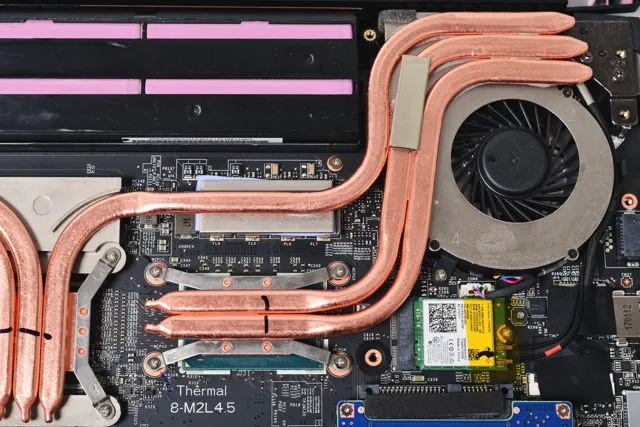
Heat pipes are often used in current heat dissipation design, including our common notebook computers, mobile phones, etc. The following factors should be considered in the design of heat pipe: heat load or heat to be transferred; Operating temperature; Pipe; Working fluid; Capillary structure; Length and diameter of heat pipe; Contact length of evaporation zone; Contact length of compensation area; Direction; The effect of heat pipe bending and flattening, etc.