Difference of air cooling and liquid cooling
With the increasing demands of DIY computer hosts, liquid cooling appears in the vision of more people and has become the standard configuration of medium and high-end hosts. At present, the main cooling methods of the host are generally divided into air cooling and liquid cooling.

The difference between air cooling and liquid cooling:
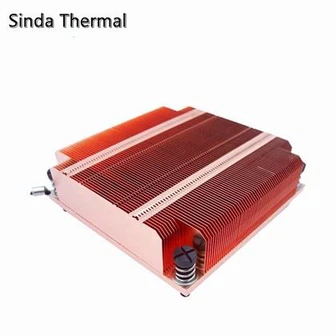
Air cooling is the process of using the radiator to contact the hot spot and expelling the heat through the fan. Air cooling heatsink is generally composed of base,copper pipe, stamping fin, and a fan.
Liquid cooling is a process that contacts the core heating components through the radiator, takes water as the medium, brings the heat to the largerliquid cooling exhaust, and uses the low-speed fan to easily discharge the heat.
Liquid cooling is divided into integrated liquid cooling and split liquid cooling:
The Integrated liquid cooling is generally composed of cold exhaust, fan and CPU cold head, which is not flexible for performance extension.
 The Split liquid cooling generally consists of CPU cold head, GPU cold head, fan, cold exhaust, water pump, water tank and connector.

The mainly comparison between air cooling and liquid cooling can be analyzed from their heat dissipation efficiency, mute degree, safety index, price gap and visual appearance: