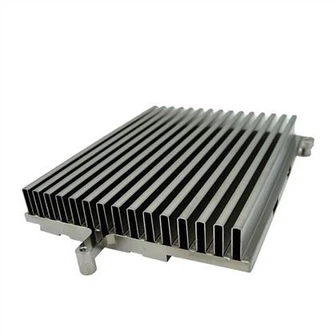
Do you know? It turns out that drones can also be water-cooled to dissipate heat!
UAV is a kind of unmanned aircraft operated by radio remote control equipment and self-provided program control device. It can be divided into military and civilian use according to application fields. And it is widely used in aerial photography, agriculture, plant protection, disaster rescue, film and television shooting and romantic making, which greatly expands the use of drones themselves.
In the existing drones, there are problems of poor damping effect, weak heat dissipation, and poor energy-saving effect. In the process of landing, the internal components are often loosened or damaged due to excessive impact force. In addition, the internal components are often burned out due to overheating when working for a long time, and its energy saving performance is poor. Therefore, it is necessary to design an unmanned aerial vehicle with good shock absorption effect, strong heat dissipation and good energy saving effect.

First of all, for the UAV's small structure, concentrated heat and very large heat dissipation characteristics, it is necessary to have an efficient heat dissipation method to meet it. Traditional heat dissipation methods include passive heat dissipation and air-cooled heat dissipation. These two heat dissipation methods are relatively simple and low in cost, and are widely used in many industries.
As precision equipment, drones have great requirements for heat dissipation. If the heat dissipation is not done well, deviations in flight will bring serious consequences. Even the equipment will be damaged. UAVs have high requirements for accuracy and stability, so all conditions must be serviced around this goal.
As a trend of heat dissipation, water cooling has been introduced into the heat dissipation of drones. The advantage of water cooling is that it is quiet, efficient and green. It uses the power of the water pump to push the heat transfer liquid into the cold head, then reaches the heat dissipation cold exhaust, and returns to the water pump after the cooling process is completed. In this way, the purpose of water cooling is achieved. Another advantage of water cooling is that it can be customized. For equipment in different scenarios, different cold heads, cold drains, water pumps, etc. can be customized to better match the usage scenarios.