Energy storage thermal solution Trends
Energy storage, as a key link in improving the consumption of new energy and balancing energy supply and demand, has significant development significance and is an inevitable result of low-carbon development. Energy storage cooling is not only a technological challenge, but also an innovative exploration of future energy management. Statistics show that in 2022, the global shipment of energy storage batteries exceeded 150 GWh, of which China's shipment of energy storage batteries reached 130 GWh, accounting for a high proportion of 87% of the world. In the first half of 2023 alone, the newly added energy storage capacity in China was 8.0GW/16.7GWh, exceeding the 7.3GW/15.9GWh in the same period last year.

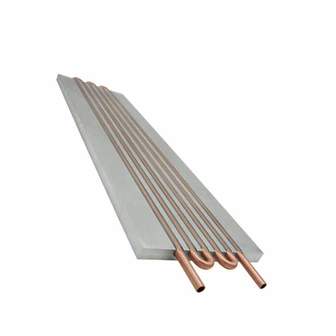
As for the current energy storage cooling technology, liquid cooling technology is becoming the mainstream in the energy storage market due to its advantages such as high thermal conductivity, more uniform heat dissipation, lower energy consumption, and less footprint. It is understood that liquid cooling technology utilizes an efficient cooling method using coolant to dissipate heat from the battery system through circulation, achieving the optimal operating temperature conditions for the energy storage system. In recent years, with the advent of large-scale energy storage and the new energy industry era, higher requirements have been put forward for energy storage systems and battery technology, and liquid cooled energy storage also faces some challenges.

Firstly, the liquid cooling pipeline is complex with multiple interfaces, and ensuring the operational reliability of the pipeline throughout its entire lifecycle is the key; Secondly, the lifespan of antifreeze is relatively short and requires regular maintenance. Generally, after 3-5 years, it requires certain operations or replacement; Finally, the overall weight of the liquid cooled pack is several hundred kilograms, and maintenance of the pack requires specialized equipment and tools, as well as high requirements for operation and maintenance. Therefore, in the context of large-scale application of new energy, energy storage technology and industry are facing new challenges. The rapid development of power batteries has put forward higher requirements for battery safety and thermal management, directly giving rise to an urgent demand for products such as low conductivity coolants.

In the future development of energy storage, cooling is no longer a simple technical issue, but a core issue related to energy utilization efficiency and system stability. Continuously enhancing independent innovation capabilities, exploring and developing more efficient energy storage cooling technologies and products, and taking practical actions to support the high-quality development of the global energy industry, providing more possibilities for low-carbon energy management worldwide.