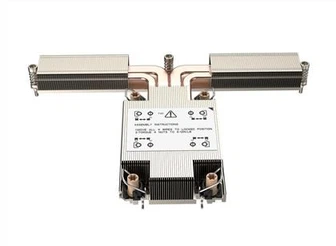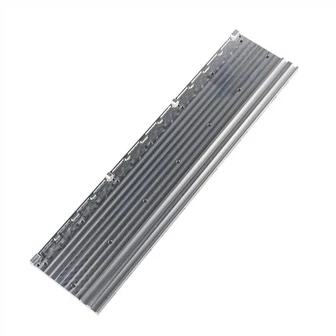
Flexible heat pipe cooling technology
As modern electronic information equipment and other high-tech products are developing towards miniaturization, high-speed, integration and low power consumption, the characteristics of traditional rigid heat pipe can not meet its requirements, so there is an urgent need for flexible heat pipe technology.

Flexible heat pipe classification:
Flexible heat pipes can be divided into three types according to different shell and tube materials: metal flexible heat pipes, polymer flexible heat pipes and composite flexible heat pipes. The metal flexible heat pipe is mainly divided into two types, one is that the metal has its own extension property to realize the flexible characteristics, and the other is that the metal bellows is used as the flexible connecting material. Because the properties of metal cannot be changed, the zigzag ability of this kind of metal flexible heat pipe is not outstanding. The polymer flexible heat pipe is a flexible heat pipe with zigzag ability using polymer material as shell. Although the polymer has flexible characteristics, the thermal conductivity of this kind of polymer is poor, which increases the heat transfer resistance of the heat pipe and reduces the heat transfer efficiency of the heat pipe.
Composite heat pipes can be divided into two categories. One is the composite metal layer on the polymer surface, which can improve the mechanical strength, air tightness and thermal conductivity of the composite. However, the thermal conductivity of the polymer itself is poor. The heat at the evaporation end and condensation end still needs to be transmitted through the polymer, and the overall thermal conductivity of the heat pipe is relatively weak.
The other uses polymer materials to connect the evaporation end and the condensation end of the heat pipe. At the same time, the evaporation end and condensation end are made of metal materials, which can not only enhance the heat transfer performance of the flexible heat pipe, but also maintain the good zigzag ability of the polymer. Comparatively, this method is difficult in processing technology.

Factors affecting heat transfer performance of flexible heat pipe:
1. radius of curvature: it is found that the change of radius of curvature in the heat transfer process of flexible heat pipe has an important impact on the heat transfer performance. Dai Xuan et al. Found that the thermal resistance and power of flexible heat pipe change with the change of curvature radius.
2. capillary pressure difference. The capillary pressure difference of flexible heat pipe has an important impact on its heat transfer performance. When the heat pipe reaches the capillary limit, due to the large temperature difference between the two ends of evaporation and condensation, the capillary force of the capillary body is insufficient, so that the condensed liquid cannot completely return. The evaporation and drying of the evaporator leads to the failure of the heat pipe. Therefore, the capillary pressure difference has a great influence on the heat transfer performance of the heat pipe.
3. Liquid filling rate: the liquid filling rate refers to the ratio of the volume of the filled liquid to the volume of the area in the capillary structure required for liquid flow. The physical meaning of porosity refers to the volume ratio between the pore part and the whole in the capillary cycle. Then according to the size of capillary structure and porosity in the heat pipe, the theoretical fluid filling capacity is calculated. When the filling rate is low, the working medium is insufficient, and the heat is not completely exchanged from evaporation to condensation, which increases the temperature difference at both ends, improves the thermal conductivity and thermal resistance of the heat pipe, and affects its heat transfer performance. If the liquid filling rate is too high, too much working fluid will submerge the liquid absorption structure in the evaporation area. When the liquid in the tube flows into the evaporation section, the heat transfer resistance will be increased.
Flexible heat pipes are widely used in computer, communication equipment, electronic device heat dissipation, solar energy and other fields. Software heat pipes are manufactured with a certain length of software. When installed, the bending degree of heat pipes can be set within a certain angle range, and play an important role in silent heat dissipation.