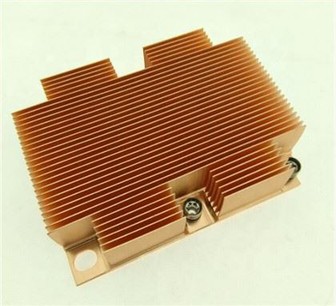
Graphene carbon plastic alloy heat dissipation solution debuted at Guangya Exhibition for the first time, becoming the focus of the audience
When graphene is used in the field of LED heat dissipation, what kind of sparks will it collide with? At the Guangya Exhibition a week ago, we found that there was a booth in Hall 10.2 exhibiting various non-aluminum radiators, which attracted the attention of many exhibitors at home and abroad. One of the hottest booths in the exhibition.
According to on-site staff, these radiators are developed based on a new type of material-"carbon-plastic alloy". Carbon-plastic alloy is a new type of ultra-high thermal conductivity composite material composed of graphene and polymer materials. It is independently developed by Xiamen Kaina Graphene Technology Co., Ltd. based on its original sixth-generation core technology of physical and mechanical exfoliation graphene.
It is understood that graphene is a two-dimensional nanomaterial with a hexagonal honeycomb lattice composed of carbon atoms and SP2 hybrid orbitals. In 2004, the University of Manchester Andrei Heim and Konstantin Novosenov first discovered graphene. In October 2010, they jointly won the Nobel Prize in Physics for their outstanding research results in graphene materials. As a high-performance strategic frontier material, graphene is included in the development directory of my country's "Made in China 2025". The thermal conductivity of graphene is as high as 5300W/m·K, which is far greater than traditional metal heat dissipation materials such as copper (about 400W/m·K) and aluminum (about 240W/m·K). The ultra-high thermal conductivity and other excellent properties make graphene a promising next-generation heat dissipation and thermal management material, and it has a wide range of applications in the field of high-power LED lighting.
Xiamen Kaina was registered and established 5 months before graphene won the Nobel Prize. It is not only one of the earliest graphene companies established in China, but also a national high-tech enterprise specializing in graphene R&D, production and sales. The industry-leading sixth-generation physical mechanical peeling graphene core technology has greatly reduced the cost of KNG graphene and has become a leader in the physical preparation of graphene.
After years of precipitation and development, Xiamen Kaina has formed a business structure of "one hard core technology and two advantageous applications": graphene is used as hard core technology, and high thermal conductivity carbon-plastic alloys have been developed in terms of heat conduction market applications. LED heat dissipation is the first breakthrough, leading to graphene thermal management applications; in the field of conductive market applications, the development of high-performance graphene conductive agents for lithium batteries has led to new energy applications of graphene.

Carbon-plastic alloy has the characteristics of low material cost, no secondary processing required by injection molding, and the weight is more than 40% lighter than aluminum alloy, which can bring great economic value to users. In addition, the super corrosion resistance of carbon plastic alloy, after 2016 hours of salt spray exposure (50g/l salt water concentration, 35°, saturated air temperature 47°[GB/T 10125-2012]), its heat dissipation performance did not occur. The change makes the carbon-plastic alloy radiator no longer need expensive painting, electroplating or anodic oxidation secondary processing like aluminum alloy to achieve better stability in harsh environments.
It is reported that since Xiamen Kaina launched the first generation of carbon-plastic alloy materials in 2018, it has used LED heat dissipation as the first breakthrough. It has been used in commercial lighting (spotlights, downlights, track lights, etc.), engineering lighting (street lights, Significant progress has been made in the applications of industrial and mining lamps, floodlights, integrated street lamp housings, etc.) and automotive lamps. At present, the second-generation ultra-high-strength carbon-plastic alloy material technology has matured, and the products have formed two major series of general-purpose and enhanced products. The trend of "replacing aluminum with plastic" is emerging in the fields of LED, electronic appliances, communication equipment, and industrial control. trend.