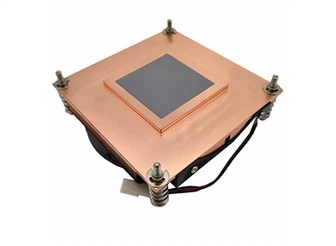
High power frequency converter cooling ways
Frequency converters provide power and control for commercial and industrial motors and must be thermally protected according to their design and application environment. The main advantages of the frequency converter are flexible control, stable startup and shutdown performance, and significant energy saving brought by centrifugal fans and pumps operating under variable load.
The efficiency of most frequency converters and their accessories is not only increased by 4%, but also increased by 2% in the electronic system. However, due to the large power conversion in high-power frequency converter, even if the efficiency loss is low, it will lead to the generation of waste heat from several kilowatts to tens of kilowatts. We must try to dissipate these heat.

1. Opened or sealed:
In an open air-cooled cabinet, it is easy to remove these heat. However, in the harsh environment, it is impossible to use filter fan cooling or direct air flow to cool, and the heat management of the shell has become an important part of the design process. The research strategy is very important for the frequency converter that cools the medium and high-power sealed shell efficiently, passively and economically in the harsh environment.
The open air flow cabinet can let the ambient air circulate through the cabinet and directly and effectively cool the high-power module. The sealed enclosure does not allow external air to enter the cabinet, but uses the air in the cabinet to cool the electronic products and export the heat to the ambient air through the heat exchanger. Both cabinets are suitable for low power systems. However, for many high-power inverter cabinets, the power consumption level is higher than that of air cooling. Low power components are generally cooled directly by air flow, while higher power components are cooled directly or indirectly by facility cooling water, steam compression system or pumped liquid system.

2. Thermosyphon cooling:
Loop thermosyphon (LTS) is a gravity driven two-phase cooling device. Their working mode is similar to that of heat pipe. As long as the working fluid evaporates and condenses in a closed cycle, it can transfer heat within a given distance. Compared with heat pipe, the main advantage of loop thermosyphon is that it can use conductive working fluid and transmit high power efficiently and remotely. Compared with the active liquid coolant, steam compression or pumped two-phase cooling system, the loop thermosyphon has no moving parts and has higher reliability. The loop thermosyphon is very suitable for transferring high-power waste heat from the power electronic equipment in the cabinet to the external environment of the cabinet.

3. Sealed shell heat exchanger:
In the combination of loop thermosyphon and sealed heat exchanger, high-power insulated gate bipolar transistor (IGBT) or integrated gate commutated thyristor (IGCT) is installed on the cold plate of loop thermosyphon. Its 10kW load plus heat load is dissipated into the air of external cabinet through loop thermosyphon. All secondary electronic components are cooled by sealed gas-gas heat exchanger, which can export waste heat of about 1 kW. The sealed shell cooler can discharge the heat generated by the low-power and distributed components in the power electronics cabinet, and prevent the pollutants in the external air from interacting with these components. The combination of the two cooling solutions can reliably cool the high-power motor controller in the sealed shell required by the harsh working environment.

4. Liquid cooling:
Liquid cooling is a common way of industrial liquid cooling. For the equipment of frequency converter, this method is rarely used for heat dissipation because of its high cost and large volume when used in small capacity frequency converter. Moreover, since the capacity of general frequency converter is from a few KVA to nearly 100 KVA and the capacity is not very large, it is difficult to make the cost performance acceptable to users. This method is only used in special occasions) and frequency converters with particularly large capacity.

No matter which thermal solution is adopted, its power consumption shall be determined according to the capacity of the frequency converter, and appropriate fans and radiators shall be selected to achieve excellent cost performance. At the same time, the environmental factors used by the frequency converter shall be fully taken into account. In view of the harsh environment, corresponding measures must be taken to ensure the normal and reliable operation of the frequency converter. From the perspective of the frequency converter itself, the influence of adverse factors should be avoided as far as possible to ensure the reliable operation of the frequency converter.