IGBT cooling solutions
For the power electronics, Insulated Gate Bipolar Transistors (IGBTs) play a pivotal role in converting and controlling electrical power. However, with great power comes great heat, and effective cooling solutions are imperative to ensure the optimal performance and longevity of IGBTs. This article explores the challenges posed by IGBT heat dissipation and the cutting-edge cooling solutions designed to address them.
Understanding IGBT Heat Dissipation Challenges:
IGBTs are semiconductor devices widely used in power electronic applications, ranging from motor drives and inverters to power supplies and renewable energy systems. As IGBTs switch high currents at high frequencies, they generate considerable heat during operation. Failure to manage this heat effectively can result in performance degradation, reduced efficiency, and, in extreme cases, damage to the IGBTs.
The Importance of IGBT Cooling:
Effective IGBT cooling is essential to maintain the devices within their specified temperature limits. Elevated temperatures can compromise the reliability and efficiency of IGBTs, impacting their overall performance. Cooling solutions not only prevent overheating but also contribute to the longevity of power electronic systems.
Advanced IGBT Cooling Solutions:
Air Cooling:
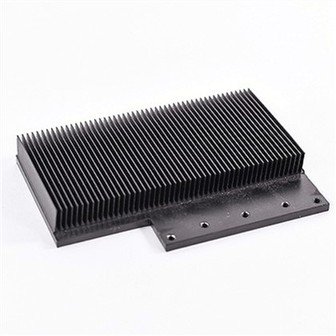
Air cooling is a common and cost-effective method for dissipating heat from IGBTs. Heat sinks with fins are often employed to increase the surface area for better heat dissipation. Airflow, generated by natural convection or forced by fans, enhances the cooling efficiency.
Liquid Cooling:
Liquid cooling solutions involve circulating a coolant, typically water or a specialized cooling fluid, in close proximity to the IGBTs. Liquid cooling is highly efficient and allows for precise temperature control, making it suitable for applications where air cooling may be insufficient.
Phase-Change Materials (PCM):
Phase-change materials are substances that absorb and release heat during phase transitions. When integrated into the IGBT cooling system, PCM helps regulate temperatures by absorbing excess heat during high-load conditions and releasing it when the load decreases.
Heat Pipes:
Heat pipes are heat transfer devices that efficiently move heat away from IGBTs. With a sealed tube containing a small amount of working fluid, heat pipes utilize phase change to rapidly transport heat over long distances, offering an effective and passive cooling solution.
Vapor Chamber Cooling:
Vapor chambers take the concept of heat pipes a step further by providing a two-dimensional, planar structure for enhanced heat spreading. They excel in uniformly distributing heat across larger surfaces, making them suitable for applications with varying heat loads.
Factors Influencing the Choice of IGBT Cooling Solution:
Application Requirements:
The nature of the application, whether it's a motor drive, inverter, or power supply, dictates the specific cooling requirements. Different applications may benefit from varying cooling solutions based on their thermal profiles.
Space Constraints:
The available space within the electronic system influences the choice of cooling solution. Compact applications may favor solutions with a smaller footprint, such as liquid cooling or advanced heat sink designs.
Cost Considerations:
Budget constraints may impact the choice between air cooling and more advanced solutions. While air cooling is often cost-effective, applications demanding higher performance may justify the investment in liquid cooling or vapor chamber solutions.
IGBT cooling solutions are integral to ensuring the reliability and efficiency of power electronic systems. As the demand for higher power densities and increased efficiency continues to rise, the choice of an appropriate cooling solution becomes a critical aspect of design and engineering. Whether through traditional air cooling methods or cutting-edge technologies like liquid cooling and vapor chambers, the thermal management of IGBTs remains a dynamic field, continually evolving to meet the challenges posed by the ever-advancing landscape of power electronics.
As a leading radiator manufacturer, Sinda Thermal can offer wide range of heat sink types, such as aluminum extruded heat sink, skived fin heat sink, pin fin heat sink, zipper fin heatsink, liquid cooling cold plate, etc. Aslo we can provide great quality and outstanding customer service. Sinda Thermal consistently delivers custom heatsinks to meet the unique requirements of various industries.
Sinda Thermal was established in 2014 and has grown rapidly due to its commitment to excellence and innovation in the field of thermal management. The company has a great manufacturing facility equipped with advanced technology and machinery, this ensures that Sinda Thermal is able to produce various types of radiators and customize them to meet the different needs of customers.

FAQ
1. Q: Are you a trading company or manufacturer?
A: We are a leading heat sink manufacturer, our factory has been founded over 8 years, we are professional and experienced.
2. Q: Can you provide OEM/ODM service?
A: Yes, OEM/ODM are available.
3. Q: Do you have MOQ limit?
A: No, we don't set up MOQ, prototype samples are available.
4. Q: What's the lead time of the production?
A: For prototype samples, the lead time is 1-2 weeks, for mass production, the lead time is 4-6 weeks.
5. Q: Can I visit your factory?
A: Yes, Welcome to Sinda Thermal.