

Ningde Times: the first MTB cooling technology overcome the thermal problem
The full English name of MTB is Module to Bracket, which means that the module is directly integrated into the vehicle support/chassis. Similar to the ideas of Ningde Era's CTP (Cell to Pack) and CTC (Cell to Chassis), MTB also improves energy density by improving space utilization. This technology directly points to the two major pain points of heavy truck and construction machinery electrification - limited battery space and complex and harsh application scenarios.
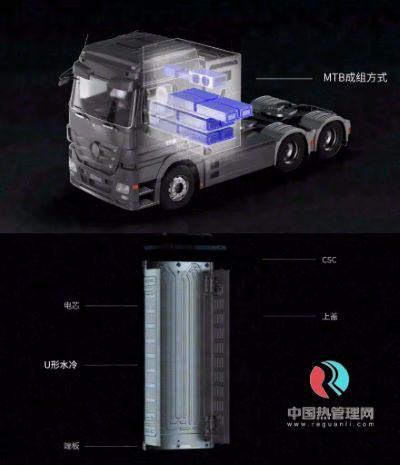
According to the introduction of Ningde Times, compared with the traditional battery pack+frame/chassis grouping mode, the system volume utilization rate under the support of this technology is increased by 40% and the weight is reduced by 10%; Through the introduction of U-shaped water-cooled thermal technology, the battery system has a service life of 10000 times, more than twice that of similar products; 140 KWh to 600 KWh can be configured, and the system energy density is 305 Wh/L and 170 Wh/kg, meeting the demand for differentiated use; This technology makes the low frame design feasible, and the vehicle center of gravity is reduced by 21%; It can be used between - 35 ° C and 65 ° C.

The thermal management technology is closely related to the battery's key performance such as endurance, fast charging, safety, life and efficiency. Both the MTB scheme and the CTP3.0 Kirin battery previously released by Ningde Times have applied liquid cooling technology. The innovation of U-shaped liquid cooling plate is the highlight of this MTB scheme. Compared with the large surface cooling technology of Kirin battery, the key to forming the U-shaped liquid cooling plate is the hot press.

At present, the liquid cooling plate is the core component of the thermal management system. The liquid cooling system is the cornerstone for the safety and stability of new energy vehicles and the realization of high power charging and discharging of the electric core. In the future, the long endurance and ultra fast charging will put forward higher requirements for the electric core thermal management system, and the consumption of the corresponding liquid cold plate is expected to continue to increase.


