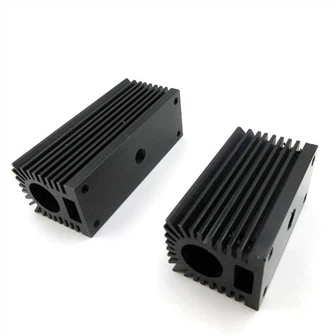
NVIDIA RTX 5090 thermal cooling solutions
According to foreign media Hardwaretimes, the next generation NVIDIA flagship graphics card RTX 5090 will use TSMC's 3nm process and is expected to be launched by the end of next year. Nvidia launched the RTX 40 series graphics card codenamed Ada Lovelace last year, while foreign media Hardwaretimes referred to the next generation of Nvidia RTX graphics cards as Blackwell and stated that these GPUs will be manufactured on TSMC's 3nm (N3) nodes, with a transistor count of over 15 billion and a density of nearly 300 million/mm ², The core clock will exceed 3 Ghz and the bus density will reach 512 bits.

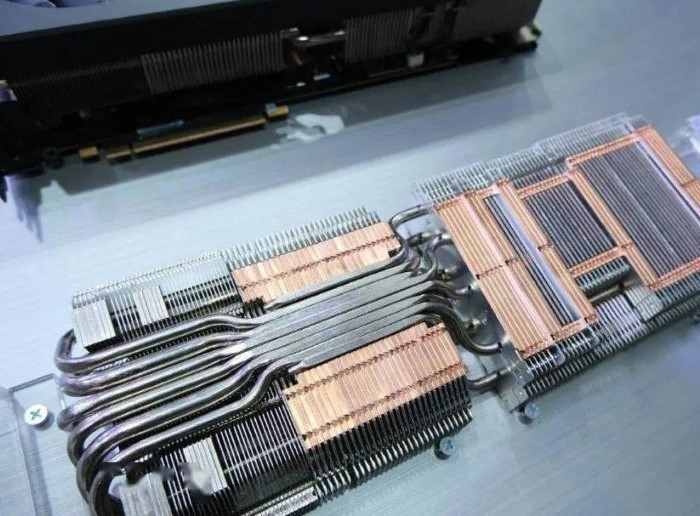
Recently, at the Computex Computer Show in Taipei, MSI also showcased the cooling design of the next generation NVIDIA RTX flagship graphics card. It is reported that MSI uses dynamic bimetallic fins, and six through pure copper heat pipes and large area aluminum fins are embedded with copper sheets to further enhance heat dissipation, with corresponding copper sheets in the graphics storage area.
The RTX 5090 will contain 144 sets of SM units, or 18432 CUDAs, which is 12.5% more than the RTX 4090. In addition, the RTX 5090 is equipped with a 96MB secondary cache that matches GDDR7 graphics memory (384 bits wide) and supports PCIe 5.0 x16. The RTX 50 series graphics card adopts the 3nm process customized by TSMC for NVIDIA, which further improves overall energy efficiency. The core frequency exceeds 3GHz, and the performance is expected to reach 2 to 2.6 times that of the RTX 40 series. Therfore , thermal cooling design is also crucial to the whole GPU performance.