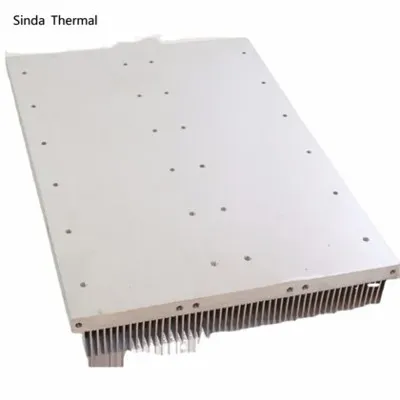
power supply cooling
The power supply module has energy loss in the process of voltage conversion. The generation of thermal energy leads to the heating of the module, reduces the conversion efficiency of the power supply, directly affects the normal operation of the power module, and may directly affect the performance of other surrounding devices.

There are three basic methods to transfer the energy of power module from high temperature area to low temperature area: radiation, transmission and convection.
Radiation: electromagnetic induction transfer of heat between two objects with different temperatures.
Transmission: heat transfer through solid medium.
Convection: heat transfer through fluid medium (gas).
In various specific applications, the effects of the three heat transfer methods are also different. In most applications, convection is the core heat transfer method. If two other heat dissipation methods are added, the actual effect is better. However, in some cases, these two methods may also have adverse effects. Therefore, when designing a high-quality heat dissipation system, all three heat transfer methods should be carefully and fully considered.

There are three effective ways to heat the power module:
1.Radiation source cooling:
In most cases, the radiation source dissipates only 10% or less of the total calorific value. Therefore, the radiation cooling is generally only used as an auxiliary way other than the core heat dissipation method, and its direct impact on the temperature of the power module is generally not fully considered in the thermal design. In specific applications, the temperature of the converter control module is generally higher than the natural ambient temperature. Therefore, the transfer of radiant kinetic energy is conducive to heat dissipation.
In the thermal design, the relative parts of the components around the converter control module should be arranged scientifically according to the direct impact of heat radiation. When the scalding components are close to the converter control module, in order to weaken the heating effect of the radiation source, thin fins of the heat insulation board shall be inserted between the control module and the scalding components.

2. Transmission cooling:
Using appropriate raw materials and cross-sectional area can also effectively reduce the thermal resistance of heat transfer components. When the installation space and cost are allowed, the heatsink with the lowest thermal resistance value shall be used. The production and manufacturing raw materials of heat sink are the key factors affecting efficiency, so we must pay attention to many aspects when selecting. In most applications, the heat generated by the power module will be transmitted from the substrate to the radiator or heat transfer components.

3. Convection Cooling:
Convection cooling is a commonly used heat dissipation method. Convection is generally divided into natural convection and forced convection. Heat is transferred from the surface of the heating block to the surrounding static air with low temperature, which is called natural convection; Heat is transferred from the surface of the heating block to the flowing air , which is called forced convection.
The advantages of natural convection are easy to realize, no electric fan, low cost and high reliability of heat dissipation. However, compared with forced convection, in order to achieve the same substrate temperature, the volume of heatsink is very large.

High temperature has a great impact on the reliability of the power module. Reducing the conversion efficiency of the power supply may not only directly affect the normal operation of the power module, but also directly affect the performance and service life of other surrounding devices.