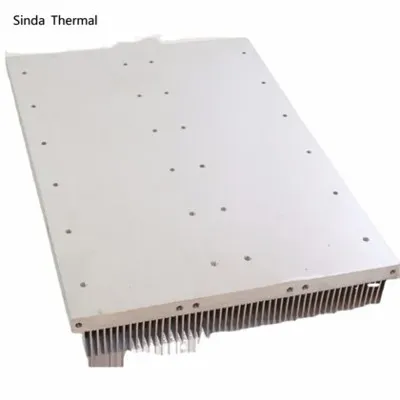
Solid state active cooling Mini PC Application
In edge side devices, the stronger the performance of the CPU, the higher the power consumption, and the higher the demand for the heat dissipation ability of the heat dissipation module. The traditional active heat dissipation scheme uses a combination of heat dissipation fins and a fan to assist in heat dissipation, while passive heat dissipation relies solely on the characteristics of the heat dissipation material to conduct heat. The higher the heat dissipation requirements, the larger the heat dissipation fins. In order to achieve a balance between reliability and small size, low-power passive cooling solutions are commonly used in practical applications of the Internet of Things.

Sotai ZBOX PI430AJ is the world's first similar product equipped with a solid-state active cooling module. This cooling module combines the efficient heat dissipation of traditional active heat dissipation with the small volume characteristics of passive heat dissipation. It can generate a back pressure of 10 times higher than traditional fans (up to 1750 Pa) through the vibration of the internal membrane, and comes with excellent dust resistance. Coupled with its lightweight characteristics, it can optimize the internal space of the product while ensuring heat dissipation capacity, greatly improving product reliability.

With its minimal volume PC design, it is widely used in various fields such as digital advertising, industrial automation, and the Internet of Things. In the application scenarios of the Internet of Things, edge devices play a crucial role. These devices need to have extremely high reliability, and most of them need to operate in narrow spaces. Therefore, volume limitations for products are also very important.