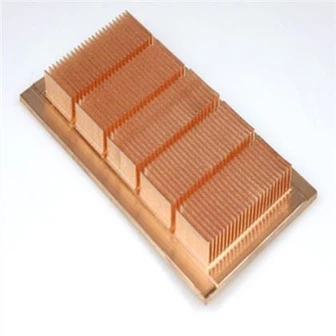
The importance of heat dissipation has increased, and the rise of heat pipe and uniform temperature plate technology
With the advancement of technology and the transformation of people's consumption concepts, the public's requirements for electronic products are gradually becoming thinner, more fashionable, and more versatile. As the performance of electronic products becomes more and more powerful, integration and assembly density will continue to increase, resulting in a sharp increase in power consumption and heat generation. According to statistics, the failure of electronic components caused by heat concentration accounts for 55% of the total failure rate. Therefore, heat treatment technology is an important factor to be considered in electronic products.
Traditional thermal conductive materials are mainly metal materials, but metal materials have high density and high expansion coefficient.When high thermal conductivity is required, they cannot meet the requirements of use. The thermally conductive graphite sheet has a unique grain orientation and can conduct heat evenly in two directions. At present, most smart phones use graphite sheet heat dissipation solutions, but as the heat dissipation requirements of electronic devices increase, the heat conduction of single-layer or double-layer graphite sheets cannot meet the higher heat dissipation requirements.
The hot air from 5G.
The high speed and low latency of the 5G era have brought us a better experience, but electronic products will consume more power and generate more heat. Therefore, the thermal and heat dissipation capabilities of consumer electronics have become the key to stable products. One of the technologies. In addition, in the 5G era, the integrated functions of electronic devices have gradually increased and become more complicated, and the size of the devices themselves has been shrinking, which puts forward higher requirements on the heat treatment technology of electronic devices. Therefore, one of the most difficult points in the development of 5G electronic equipment is to solve the heat dissipation problem.
5G mobile phones require faster transmission speeds, MIMO technology increases the number of antennas, and the number of frequency bands that the RF front-end needs to support has greatly increased. At the same time, with the increase in the difficulty of high-frequency signal processing, the performance requirements of the system's radio frequency components have also been greatly improved. New applications such as carrier aggregation and MIMO technology require technical updates for each radio frequency device. 4G mobile phone antennas are mainly 2*2 MIMO, while 5G uses more 4*4 MIMO antenna schemes to improve 5G transmission speed. However, a large amount of heat is generated during high-speed transmission. Therefore, how to reduce the temperature increased during transmission and reduce the loss of mobile phone performance is one of the current challenges in the development of 5G mobile phones.
The ordinary filter of 5G mobile phone is very sensitive to temperature. If the external temperature environment changes, the performance of the filter will drop sharply. Compared with 4G mobile phones, with the increase in the number of frequency bands, the demand for radio frequency filter components in 5G mobile phones also increases, and the requirements for temperature processing also increase.
The heat dissipation technology of uniform temperature plate and heat pipe will develop in the direction of lighter, thinner and more efficient in the future.
In the process of electronic equipment pursuing fashion, thinness and lightness have become an inevitable topic. Thinner equipment means that thinner heat pipes and uniform temperature plates are required. As the main material of heat pipes, copper requires a certain thickness to maintain the shape, but the space for consumer electronics is limited. Therefore, balancing the relationship between heat pipes and equipment has become the focus of the development of the industry. Currently, some Japanese and domestic companies are working hard to develop ultra-thin heat pipes for smartphones. In the future, with the emergence of high-power products and the digital transformation of the industry, the market demand for high-efficiency heat pipes and soaking plates will rise sharply. At the same time, more production requirements will be put forward, which will promote better quality and more efficient heat dissipation products. The upgrading of the direction of the industry is conducive to the healthy and healthy development of the industry.