The introduction of passive heat management solutions to promote the development of medical electronic devices
From imaging devices to surgical instruments to automated immunity, the powerful medical technologies of the 21st century are impressive, thanks in large part to the increased computational power of microprocessors. For thermal engineers, however, these advances have come at a price. The more power a device has, the more heat it generates, and in general, it has to dissipate in a smaller and smaller space (as the size of the device becomes smaller). As our demand for precision and reliability in medical devices increases, heat dissipation control becomes even more important.
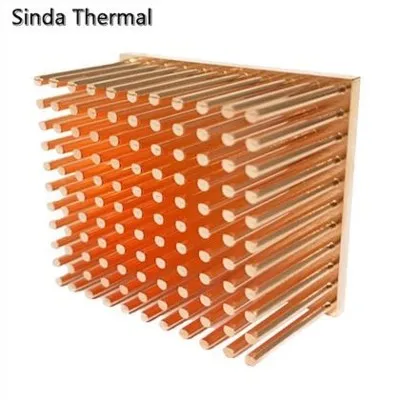
Another challenge stems from the fact that medical devices have some special requirements because of the high risks involved. For example, some materials commonly used in heat dissipation solutions (e.g., copper) are not useful in many medical applications because of their closeness to the human body (in addition to causing inflammation in human tissues, copper can cause severe and irreversible degeneration of neural tissue). The need for precision in some medical applications may compress the space available for cooling solutions to the point of near-extinction -- surgical instruments that require heat management to avoid damage to human tissues provide designers with only 0.5 millimeters to deploy heat transfer technology.
Another area that requires ultra-small thermal management solutions is the design of human implantable devices, which require both small size and accurate temperature change coefficients in order to protect human organs. Finally, rapid periodic temperature changes (with temperature fluctuations of up to 50 ° C within milliseconds) are a common feature of many laboratory devices such as DNA splitters. All of these factors related to accuracy, reliability, size constraints, and strict material selection make medical thermal engineering a difficult task for designers. Heat transfer design engineers must choose between efficiency and size versus cost and, increasingly, heat dissipation versus low noise (which means that in some applications fans cannot be used, although their high volume gas flow rate makes them optimal for heat dissipation).
The heat transferring
Thermal engineers have increasingly turned to passive heat transfer devices (e.g., thermal tubes) to address these challenges, because the working liquid in the heat conduction tube has liquid and water vapor two forms of existence, so the heat conduction tube is a two-phase cooling device.The transfer of heat is achieved by the transformation of the working fluid from liquid to water vapor. The continuous cycle of evaporation, transfer (heat), condensation, and return of the condensed working fluid to the evaporation zone.
There will be no delivery component failure during this work-a core consideration in applications where reliability is Paramount to achieve accurate results or achieve patient recovery. The design of passive heat transfer components is straightforward and generally involves a vacuum sealed tube filled with working fluid that is relatively easy to miniaturize. Advances in capillary structure technology help ensure that the cooled and condensed working fluid resists gravity and is returned efficiently and reliably to the heat input section of the conducting tube. This allows the conducting pipe to operate in different orientations. With more design freedom, designers can even use flexible heat conduction tubes.
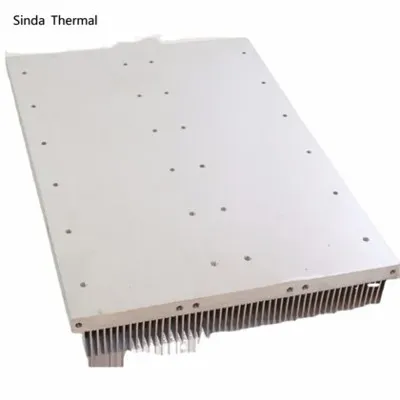
Another more commonly used heat dissipation scheme is the heat sink. The heat sink can be operated in forced or natural convection mode, but again, either approach means making trade-offs. If you increase the airflow used for cooling, it means you can reduce the number of fins or reduce the area of the fins. However, if the airflow generated by the fan is larger, the noise generated by the fan is larger. If the fan produces less air flow, the fan runs quieter and can be smaller, but this means that the radiator must have more or larger fins. Therefore, it is not easy to make the cooling components both smaller and quieter in the same equipment.
In a heat pipe heat exchanger, heat is transmitted through the heat pipe to the fins and then dissipated into the surrounding air. But it can be done, the way to reduce the size and noise at the same time is to make the radiator pieces more isothermal, the heat sink, which was previously cooled by a single thermoelectric cooler (TEC), can be redesigned to have multiple TECs that transfer heat uniformly across the surface of the heat sink instead of relying purely on heat conduction. However, in addition to requiring maintenance, such schemes add complexity and cost to the electronics. Rack type heat conduction tube assembly can provide perfect thermal stability and less technical maintenance workload. A simpler cooling solution is to use passive cooling technology to combine the heat sink with an embedded steam cavity (essentially adjusting a heat conduction tube to a flat state to become a flat heat conduction tube), or to use a heat sink whose surface is integrated with the heat conduction tube. Both schemes allow rapid and uniform heat transfer by evaporating the working fluid in an embedded heat conduction tube or vapor chamber. Water vapor carries heat evenly through the entire bottom surface of the heat sink and the heat sink fin, avoiding hot spots. Because the fins are isothermal, the flow of air through the fins carries the most heat.
In general, the shift toward passive cooling devices (e.g., heat pipes, heat sinks, and vapor chambers) in medical devices reflects an ongoing evolution toward smaller, more powerful, and more miniaturized electronics. While more traditional cooling options (refrigeration, TEC, liquid cooling plates, etc.) remain the most appropriate choice for some medical devices, designers are finding that passive cooling technology will become increasingly attractive as it evolves. Advances in material structures have also made passive cooling solutions more attractive to medical device designers. For example, the advent of pyrolytic graphite (APG) has made possible cooling components that are smaller, lighter, and more efficient than conventional aluminum or copper heat sinks.
As products move toward more miniaturization and smaller electronic enclosures, materials with higher thermal conductivity can give designers a leg up.
The effective thermal conductivity of APG is 1000 W/m.K, which is 5 times as much as solid aluminum and 2.5 times as much as solid copper. Apgs can also be packaged for applications such as surgical instruments. In such applications, it is important to avoid contact with human tissue due to concerns about tissue damage, scarring, or infection. The development of materials such as APGs helps explain why medical device designers are choosing more passive heat dissipation control systems.
Not only do these systems offer a wider range of options, but in many cases they offer better options for heat management.
Compared to traditional liquid cooling solutions, passive cooling systems are more reliable (fewer transport components means a lower risk of failure), require less maintenance, are more flexible in design, operate quieter, and in many cases are easier to manage cost. Several examples of passive heat management concepts integrated in some important medical device applications are presented below.
Diagnostic imaging
Because the performance of electronics deteriorates rapidly after a critical temperature, case cooling is critical for technologies that use a lot of electronic components, such as magnetic resonance imaging (MRI), computed tomography (CT), ultrasound and X-rays. Even small fluctuations in temperature can affect calibration and results, resulting in costly downtime and maintenance. The FDA has played an important role in driving the repeatability and reproducibility of test results for medical devices, such as scanners, biotechnology devices, and laboratory microassays, toward near-perfection (≥ 95%). To ensure accuracy, the specification mandates 31 separate tests for a single diagnostic imager (21 CFR 900.12), many of which are compromised by heat dissipation. The competitive market for diagnostic medical devices has made strict heat dissipation control an even more important factor in the design of electronic products.
Designers usually work within a very narrow range of temperature variation (δT), with a temperature difference of 10 ° C between the internal and external environments of the device chassis. Multiple sources of heat (such as equipment power and other discrete electronic components) can produce a total power output of 1200 watts or more, of which 400 watts is waste heat to be discharged. With limits on fan size and wind speed, it becomes more complicated to achieve silence. These problems can often be solved by thermal tube heat exchanger to the greatest extent. In a heat conduction tube heat exchanger, heat is transmitted from the inside of the equipment to the outside of the equipment through the heat conduction tube, and then discharged into the surrounding air through the fin type heat sink. Larger fin area and more efficient heat transfer tubes allow for smaller, quieter fans that meet the stringent heat dissipation requirements of regulatory and clinical Settings. In some cases, it is also possible to use the heat conduction tube technology for the tube itself, thus using the laws of thermodynamics rather than electronics or fans to accomplish the transfer of heat.
Similar heat pipe technology is used to cool displays in critical care monitoring equipment. As shown in the figure, a rack type thermal tube assembly can provide perfect thermal stability with little technical maintenance effort. The absence of transfer components allows for a normal service life of several million hours, making failure during critical care operations almost impossible.
Sinda Thermal is a leading heat sink manufacturer who can provdie varieties of thermal solutions for the medical equipment, we can design and build the liquid cooling heat sink, heat pipe heat sink, extruded heat sink, skived fin heat sink, etc. please contact us freely if you have any heat sink requirement.