The Technology and Market Trends of AI Cooling
Due to the rapid increase in demand for AI computing power, the performance and power consumption of AI chips have significantly improved simultaneously. The upper limit of power consumption for air-cooled chip level cooling is around 800W, and the cost-effectiveness decreases when the air-cooled chip reaches the power limit. More powerful and effective cooling solutions are needed to maintain the normal operation of the equipment.

If we only strive for improvement in heat dissipation engineering technology and make some minor adjustments or optimizations on the original plan, the speed of progress and upgrading will be slower, and the gap between the provided heat dissipation capacity and the demand for high-performance and high computing power will become increasingly large.Only through some creative and disruptive cooling technologies, can we fundamentally achieve scale or several times the capacity improvement, and solve the problem of the widening gap between chip performance cooling supply and demand faced by traditional technologies.

In terms of cooling technology, the current heat dissipation module is mainly composed of active and passive hybrid thermal technology . At present, the thermal modules are divided into air-cooling and liquid cooling :
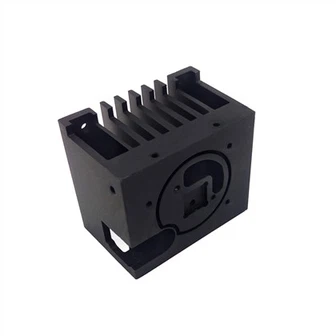
Air cooling is the process of using air as a medium to dissipate heat through intermediate materials such as heat interface materials, heat sinks (VC), or heat pipes, through convection between the heat sink or fan and the air.
Liquid cooling heat dissipation is achieved through, or immersion heat dissipation, mainly through convection with liquid heat to cool the chip. However, as the heat generation and volume of the chip increase and decrease, the thermal design power consumption (TDP) of the chip increases, and air cooling heat dissipation gradually becomes insufficient for use.

And there are 2 main thermal solutions of liquid cooling in the themral marketat present , the first mainstream liquid cooling solution is through water circulation, which enters the body through pumps and pipelines to take away heat energy. Another type is immersion technology, which places a heat source (such as a chip) in a non-conductive liquid to take away heat energy.Therefore, in order to improve the power density of a single cabinet, liquid cooling solutions have been widely used in data centers in recent years. It can be roughly divided into two technical paths: Cold Plate and Immersion.
The former indirectly transfers the heat of the heating device to the cooling liquid enclosed in the circulating pipeline through a cold plate; The latter directly places the heating device and circuit board as a whole in the liquid.Compared with air medium, liquid has higher thermal conductivity, larger specific heat capacity, and stronger heat absorption ability.In addition, liquid cooling also has significant advantages in operating costs.

Due to the rapid increase in demand for AI computing power, the power improvement of related CPUs/GPUs is showing an accelerating trend. Heat dissipation, an industry that was previously not given much attention, is becoming increasingly important due to the explosive growth in data and computing brought about by AI. The penetration rate of liquid cooling will climb from less than 10% currently to 20% by 2025.