

Vapor chamber cooling: How it works and what is the advantage?
In the fast-paced world of technology, keeping electronic devices cool and efficient is critical to their performance and longevity. One of the latest advancements in cooling technology is vapor chamber cooling, which is revolutionizing the way electronic devices are cooled. In this blog, we'll explore how vapor chamber cooling works and its advantages over traditional cooling methods.

What is vapor chamber cooling?
Vapor cooling is an efficient thermal management solution widely used in electronic devices such as smartphones, laptops, game consoles and even high-performance computers. At its core, a vapor chamber is a flat, sealed metal container that holds a small amount of liquid (usually distilled water). The air in the chamber is then evacuated, creating a vacuum.
How does vapor chamber work?
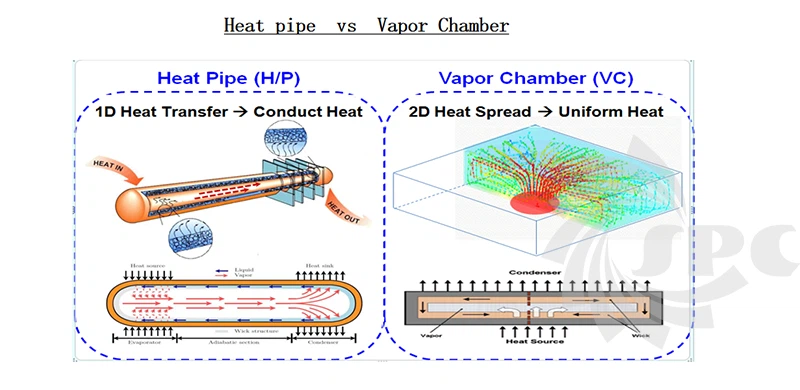
When a heat source such as a CPU or GPU generates heat, the liquid inside the vapor chamber absorbs the heat and evaporates, turning into steam. The vapor then moves to a cooler part of the chamber, where it condenses into a liquid and releases heat. This continuous cycle of evaporation and condensation helps to efficiently transfer heat away from the heat source and spread it across the surface of the vapor chamber. From there, the heat is dissipated into the air or transferred to a radiator for further cooling.
Advantages of vapor chamber cooling
1. Enhanced heat dissipation: Compared to traditional cooling solutions such as heat pipes or copper heat sinks, vapor chamber cooling provides superior heat dissipation. The ability to distribute heat evenly across the vapor chamber surface allows for more efficient cooling, resulting in lower operating temperatures and improved overall performance.
2. Thin and light design: The vapor chamber is extremely thin and light, making it ideal for thin portable electronic devices. Its slim profile allows for better integration into compact spaces without adding bulk or weight to the device.
3. Reduce hot spots: Traditional cooling methods often create hot spots, where certain areas of the device are noticeably hotter than others. Vapor cooling helps minimize hot spots by spreading heat more evenly, ensuring consistent and reliable cooling across the entire surface of the device.
4. Quiet Operation: Vapor cooling systems are known for their quiet operation as they dissipate heat efficiently without the need for loud fans or bulky cooling systems. This results in a more pleasant user experience, especially for devices used in quiet environments or for long periods of time.
5. Improved thermal performance: Using vapor chamber cooling can significantly improve the thermal performance of electronic devices, allowing for higher power levels and longer peak performance without the risk of overheating or thermal throttling.
Vapor chamber cooling is a game-changing technology that is redefining how electronic devices are cooled. Its efficient cooling, thin and light design, reduced hotspots, quiet operation, and improved thermal performance make it a top choice among manufacturers and consumers. As technology continues to advance, vapor chamber cooling is expected to play an increasingly important role in keeping electronic equipment cool and reliable.


