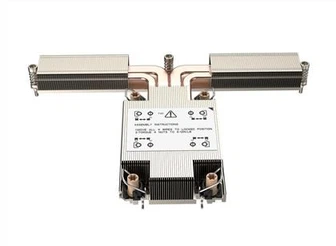
Why does air cooling is still the mainstream solution for server
The main working principle of the air-cooled system is to use the airflow generated by the fan to take away the heat inside the server, keeping the server running at an appropriate working temperature. This method is simple and efficient, and can meet the cooling needs in most application scenarios. Moreover, one of the typical characteristics of air-cooled systems is simple maintenance. Once a system problem occurs, it can usually be solved by replacing basic components such as fans, which is very important for maintaining high server availability.

The reason why server air cooling is still mainstream is mainly attributed to its advantages such as economy, strong applicability, simple maintenance, and mature technology. Especially economical, it is particularly important for enterprises operating large-scale data centers. The cost of air-cooled systems is much lower than other cooling methods such as water cooling, and they are also more economical in maintenance and energy consumption in the later stage. In addition, the maturity and widespread application of air-cooled cooling technology have provided it with richer experience and solutions, further enhancing its competitiveness in the market.

Air cooled cooling systems are highly favored due to their lower initial investment and operating costs. In large-scale application scenarios such as data centers, cost control is one of the key factors that enterprises need to consider. Compared to water cooling or other cooling technologies, air cooling technology not only has lower equipment procurement costs, but is also more economical in operation and maintenance. For example, air-cooled heat dissipation does not require complex water pipelines, pumps, and other equipment, which can significantly reduce maintenance complexity and costs.
From a long-term operational perspective, although the energy consumption of air-cooled systems is higher than that of efficient water-cooled systems, considering their lower Total Cost of Ownership (TCO), air-cooled systems are still the most economical choice in many cases. In addition, with the advancement of fan and heat dissipation technology in recent years, the energy efficiency ratio of air-cooled systems has also been improved, further enhancing their economy.

Over the years of development and optimization, air-cooled heat dissipation technology has continuously advanced, such as improved fan design, more efficient heat sink materials and layouts, all of which have greatly improved the efficiency of air-cooled heat dissipation. In addition, the widespread application of air-cooled cooling systems has also promoted the rapid iteration of related technologies and products, providing users with more possibilities for optimization and customization. Air cooling systems are suitable for a wide range of applications, from small servers to large data centers. Whether in terms of performance, reliability, or ease of maintenance, air cooling systems can meet different levels of requirements.

Easy maintenance is another undeniable advantage of air-cooled cooling systems. Compared with complex heat dissipation systems such as water cooling, air-cooled systems are structurally simpler, and maintenance work mainly focuses on regular cleaning and fan replacement, which reduces reliance on professional maintenance personnel and also lowers maintenance costs. Due to the easy replacement of components in the air-cooled system, it greatly reduces downtime caused by unexpected failures and plays an important role in improving the overall availability and business continuity of servers.

Although air-cooled cooling technology currently dominates in the field of server cooling, the continuous improvement of its energy efficiency and cooling capacity still drives continuous innovation in related technologies. For example, in order to further improve heat dissipation efficiency, future air-cooled systems may adopt more intelligent fan control strategies, more efficient heat transfer materials, and more optimized airflow management designs.
Meanwhile, with the increasing emphasis on energy consumption in data centers, improving the energy efficiency of air-cooled systems will become an important research direction. How to further reduce energy consumption while ensuring heat dissipation efficiency is one of the challenges that need to be faced in the future development of air-cooled heat dissipation technology. In addition, with the continuous improvement of server performance, the requirements for cooling systems will also increase, which requires continuous innovation in air cooling technology to adapt to the cooling needs of higher performance servers in the future.