Why heatpipe and vapor chamber needs soldering process
According to the type of core heat conduction components, the soldering heatsink can be divided into two types: heat pipe soldering heatsink and VC soldering heatsink Heat pipe and VC are two-phase heat conduction components. Through the phase change of working medium, a large amount of heat is efficiently transferred from the heat source area to the cooling area to realize the cooling of high-power components.

Based on the high thermal conductivity of heat pipe and VC, they are regarded as superconductors in the field of heat conduction. Heat pipe is one-dimensional heat conduction. VC can be regarded as the parallel form of heat pipe, which is two-dimensional heat conduction. When the heat pipe cannot carry out complex structural design or provide sufficient heat dissipation performance, VC is a good choice. VC is used as the base plate of the heatsink to achieve better and more uniform heat dissipation, so as to optimize the performance of the heatsink.

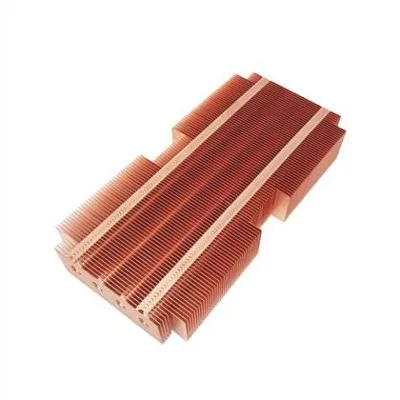
Compared with other heatsinks , the soldering heatsink contains efficient heat conduction components - heat pipe and VC, which greatly improves the performance of the heatsink. However, the increase of heat dissipation components also increases the complexity of heat dissipation path. How to reduce the contact thermal resistance between components is a major challenge for soldering heatsinks. For different products, we optimized the furnace temperature curve to improve the adhesion rate of solder, so as to achieve the best welding effect and reduce the overall thermal resistance of heat dissipation module.