3D printing application in themral heatsink production
There are a large number of integrated circuits in electronic devices such as computers and smart phones, and high temperature is the "enemy" of integrated circuits, which will lead to unstable system operation, shorten service life, and even burn some parts.

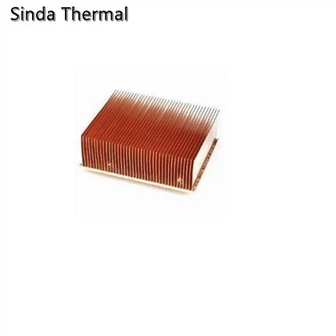
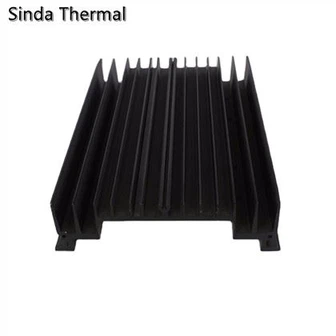
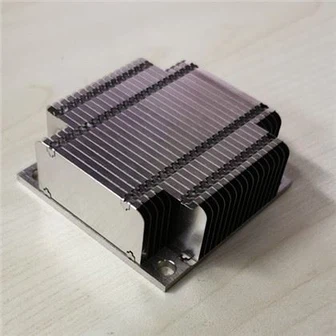
The electronic heatsink in these electronic equipment plays the role of transferring heat and adjusting the temperature of the equipment. Therefore, the electronic heatsink plays a key role in the long-term and stable operation of the equipment. Taking the computer as an example, with the improvement of people's requirements for computing power, the requirements for equipment heat dissipation performance also increase, which poses a challenge to the design optimization of electronic thermal heatsink . The significant challenge is to maximize the heat dissipation surface area and heat dissipation performance in a given volume.
The application of metal 3D printing technology in the manufacturing of electronic heatsinks has brought higher degrees of freedom to the design and optimization of electronic radiators. The application of 3D printing in the manufacturing of electronic heatsinks or heat exchangers meets the development trend of compact, efficient, modular and multi-material products, especially for special-shaped, structural integration, thin-walled, thin fins, microchannels For the processing of very complex shapes and lattice structures, 3D printing has the advantages that traditional manufacturing technology does not have.

Although 3D printing is still not suitable for mass production of heatsinks at this stage, with the continuous progress of technology, 3D printing will promote the manufacturing and development of the next generation and even the new generation of electronic heatsink.