Analysis of heat dissipation performance of high-power LED lights
LED lights are energy-saving and environmentally friendly, but they are prone to generate a lot of heat during actual operation. Once the heat cannot be discharged, it is easy to cause abnormal heat of the chip due to excessive temperature, light source degradation and reduced lamp life. [1] In simple terms, the thermal management structure of LED lamps is mainly chip-level packaging, package level and system integration heat dissipation level. This article analyzes the factors affecting the heat dissipation performance of LED lights and proposes specific optimization schemes.
1. Factors affecting the heat dissipation performance of high-power LED lights
1.1 Fin geometric parameters
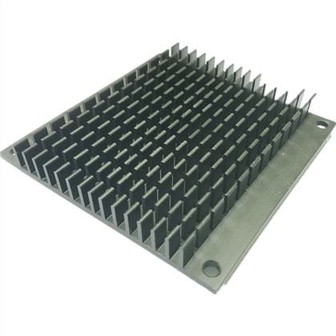
Generally speaking, changes in fin parameters such as high-power LEDs will directly affect the heat dissipation performance, showing a positive correlation. Before reaching the rated value, the increase in the thickness, height, spacing, number, and length of the fins of high-power LED lamps will lead to the improvement of heat dissipation efficiency, and from Dai Shaobi; Wang Jiaolin; Wang Qian and others in "High-power LED lamp heat pipe A similar conclusion was obtained in the article "Research on Radiator Performance" [2]. The heat dissipation effect of a fin on the upper surface is significantly lower than the heat dissipation effect of the four side fins.
1.2 The influence of outside temperature
A large amount of heat will appear during the working process of high-power LED lights, and this heat needs to be discharged in time. Therefore, when the temperature of the external temperature and the temperature of the high-power LED lights are large, it is easy to discharge heat. On the contrary, when the temperature of the external temperature and the high-power LED lights are not When it is large, it will affect the heat dissipation of the LED lamp. This temperature effect is limited, but it has a great impact on the optimal heat dissipation efficiency of LEDs.
1.3 Heat dissipation materials of LED lights
The choice of heat dissipation materials such as high-power LEDs has obvious effects on heat dissipation. Generally, in natural conditions, using materials with good performance and good heat conduction for heat dissipation, LEDs, etc., will have higher heat dissipation efficiency, but for heat radiation heat dissipation methods, you need to choose Specialized materials.
The heat dissipation performance of high-power LED lights is mainly accomplished by optimizing the heat dissipation structure and heat dissipation materials. In the design process of the LED lamp, the specific working environment must be considered, the optimal heat dissipation material must be selected, and the simulation experiment must be done at the same time to adjust the structure of the LED lamp to ensure the high performance of the LED lamp heat dissipation.