

Are all chip power consumption converted to heat
During the operation of the chip, a portion of the energy inside the transistor is converted into thermal energy during the switching process. This is caused by the Joule heating caused by the current passing through the conductor and the energy dissipation caused by the interaction between electrons and the lattice inside the transistor. Driven by Moore's Law, the continuous reduction of transistor size leads to a continuous increase in power density, further exacerbating the problem of temperature rise in chips.
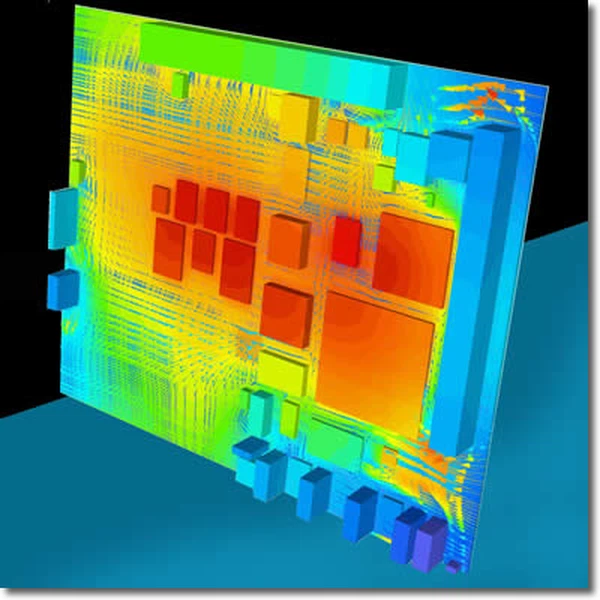
The power consumption of chips can be divided into static power consumption and dynamic power consumption. Dynamic power consumption is related to the switching frequency of transistors in the chip, which is caused by energy loss during capacitor charging and discharging processes. Static power consumption is mainly related to the leakage current of the material, and even without switching action, the chip will still consume a certain amount of energy. Both types of power consumption will ultimately be converted into heat.

With the increase of integrated circuit density and the acceleration of operating frequency, the thermal problem of modern chips has become particularly severe. Efficient cooling technology ensures that chips operate at safe temperatures, prolonging their lifespan and maintaining stability in performance. The main cooling methods include mechanical cooling (such as fan cooling), conductive cooling (using thermal conductive materials to transfer heat to the heat sink), convective cooling (using air or liquid flow to remove heat), and radiative cooling (radiating heat into the environment through electromagnetic waves). The selection and design of various cooling technologies need to be comprehensively considered based on factors such as chip power consumption characteristics, working environment, and cost-effectiveness.

In response to the growing demand for heat dissipation, heat dissipation technology is also continuously improving. Efficient heat dissipation solutions such as microchannel cooling, heat pipe technology, and liquid metal heat dissipation are being studied and applied. Microchannel cooling technology enhances the heat exchange efficiency between the coolant and the chip surface by designing ultra-thin microchannels near the chip. Heat pipe technology utilizes the phase transition of the working liquid during evaporation and condensation cycles to remove heat. Liquid metals are considered a promising technology in the field of heat dissipation due to their high thermal conductivity and good fluidity. These cutting-edge technologies are not only improving heat dissipation efficiency, but also pushing the limits of thermal management in chip design.

In summary, almost all of the power consumption of a chip is ultimately converted into heat, and heat dissipation technology is crucial for the stability and performance of the chip's operation. In the future, with the continuous progress of chip technology, innovation in heat dissipation technology will also become an important research direction in the field of electronic engineering.


