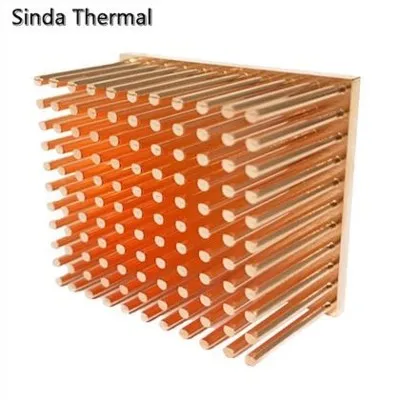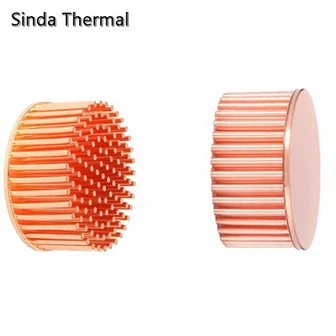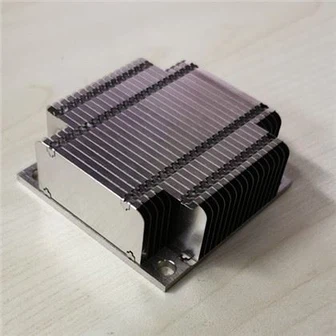
classification of GPU cooling heatsink
GPU is an indispensable component of every computer. Without GPU, we will not be able to see images. It can be seen that the GPU plays an important role in the computer industry. So how does the GPU dissipate heat during use?
Due to the continuous rise of the core working frequency of the GPU and the working frequency of the graphics memory, the heat generation of the graphics card chip is also increasing rapidly. The number of transistors in the display chip has reached or even exceeded the number in the CPU. Such a high degree of integration will inevitably lead to an increase in calorific value. In order to solve these problems, the graphics card will adopt the necessary heat dissipation method. Especially for overclocking enthusiasts and users who need to work for a long time, excellent heat dissipation method is a must for choosing a graphics card. At present, the common heat dissipation methods are passive and active. In addition, there is a special heat pipe heat dissipation method.

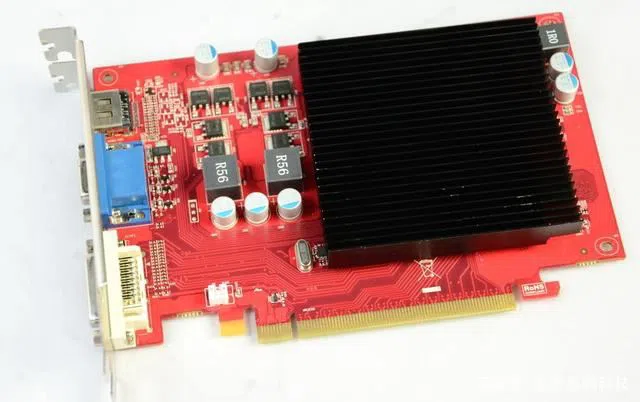
Passvie Cooling Heatsink:
Generally, some GPU with low working frequency adopt passive heat dissipation. This heat dissipation method is to install a heat sink on the display chip, and there is no need for a heat dissipation fan. Because the cooling capacity of the GPU with lower working frequency is not very large, it is not necessary to use the cooling fan. In this way, while ensuring the stable operation of the graphics card, it can not only reduce the cost, but also reduce the noise in use.
Active Cooling Heatsink:
In addition to installing a heat sink on the display chip, the active cooling is also installed with a cooling fan. This active cooling is required for graphics cards with high working frequency. Because higher working frequency will bring higher heat, it is difficult to meet the needs of heat dissipation if only one heat sink is installed, so the help of fan is needed, and it is more important for those users who use overclocking and those who need to use for a long time.

Heatpipe Assembly Heatsink:
The heat pipe is a kind of heat transfer element, which makes full use of the heat conduction principle and the fast heat transfer property of the cooling medium to transfer heat through the evaporation and condensation of the liquid in the fully closed vacuum pipe. It has a series of advantages, such as high thermal conductivity, good isothermal, arbitrary change of the heat transfer surface area on both sides of the cold and heat, long-distance heat transfer, temperature control, etc, The heat exchanger composed of heat pipes has the advantages of high heat transfer efficiency, compact structure and small fluid resistance loss. Its thermal conductivity has far exceeded that of any known metal. At present, heat pipe technology has been widely used. For example, many cold and warm air conditioners use heat pipe technology.
Heat pipe is only a high-efficiency heat conduction technology, which can not dissipate heat by itself. It must be matched with heat dissipation devices such as heat sink or fan at the condensing end to finally dissipate heat. At present, more and more graphics cards use heat pipe to dissipate heat.

Due to the continuous rise of the working frequency of the core of the GPU and the working frequency of the graphics memory, the heating capacity of the GPU is also increasing rapidly. The number of transistors in the display chip has reached or even exceeded the number in the CPU. Such a high degree of integration will inevitably lead to an increase in calorific value. In order to solve these problems, excellent thermal solution is the necessary item for selecting the graphics card.