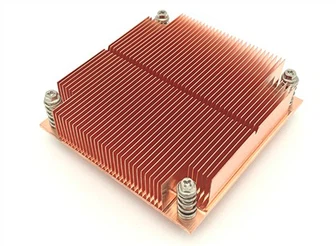
Copper heat sink VS Aluminum heat sink: which one is a better solution?
In the realm of electronic devices and machinery, managing heat is a critical aspect of ensuring optimal performance and longevity. Heat sinks play a pivotal role in dissipating excess heat generated by components such as processors, transistors, and other high-power elements. Among the various materials used for heat sinks, copper and aluminum stand out as popular choices. In the debate of Copper Heat Sink vs. Aluminum Heat Sink, which one emerges as the superior solution?
Thermal Conductivity: The Core Factor
The efficiency of a heat sink is largely determined by its thermal conductivity – the ability to transfer heat from the source to the surroundings. In this aspect, copper takes the lead over aluminum. Copper boasts a higher thermal conductivity compared to aluminum, allowing it to rapidly and effectively transport heat away from the electronic components it is meant to protect. This superior thermal conductivity makes copper an ideal choice for applications where efficient heat dissipation is paramount.
Weight and Cost Considerations: Aluminum Takes the Lead
While copper excels in thermal conductivity, it falls short in terms of weight and cost. Copper is significantly denser and heavier than aluminum, which can be a crucial factor in applications where weight is a concern. Additionally, copper tends to be more expensive than aluminum, making it a less economical choice for certain budget-sensitive projects. For applications where weight and cost are critical considerations, aluminum may emerge as the preferred solution.
Corrosion Resistance: Aluminum's Advantage
Corrosion can be a significant concern, particularly in environments with high humidity or exposure to corrosive substances. In this regard, aluminum offers a notable advantage over copper. Aluminum naturally forms a thin oxide layer on its surface, providing a protective barrier against corrosion. Copper, on the other hand, is susceptible to corrosion over time, especially in harsh conditions. When choosing a heat sink for applications in corrosive environments, aluminum may prove to be the more durable option.
Thermal Expansion: Balancing Act
Another factor to consider is thermal expansion, as temperature variations can impact the structural integrity of the heat sink. Copper has a lower coefficient of thermal expansion compared to aluminum, meaning it is less prone to expansion and contraction with temperature changes. This characteristic can be crucial in maintaining a stable and reliable thermal interface over a wide range of operating conditions.
Application-Specific Considerations
Ultimately, the choice between a copper and aluminum heat sink depends on the specific requirements of the application. If maximum thermal conductivity and efficiency are paramount, copper may be the preferred choice. Conversely, if weight, cost, and corrosion resistance are critical factors, aluminum could emerge as the more suitable solution.
Conclusion: Striking the Right Balance
In the perpetual debate of Copper Heat Sink vs. Aluminum Heat Sink, there is no one-size-fits-all answer. The superior solution depends on the unique demands of the application at hand. Engineers and designers must carefully weigh the pros and cons of each material, considering factors such as thermal conductivity, weight, cost, corrosion resistance, and thermal expansion. By striking the right balance based on these considerations, they can ensure the optimal performance and longevity of electronic devices and systems.
As a leading radiator manufacturer, Sinda Thermal can offer wide range of heat sink types, such as aluminum extruded heat sink, skived fin heat sink, pin fin heat sink, zipper fin heatsink, liquid cooling cold plate, etc. Aslo we can provide great quality and outstanding customer service. Sinda Thermal consistently delivers custom heatsinks to meet the unique requirements of various industries.
Sinda Thermal was established in 2014 and has grown rapidly due to its commitment to excellence and innovation in the field of thermal management. The company has a great manufacturing facility equipped with advanced technology and machinery, this ensures that Sinda Thermal is able to produce various types of radiators and customize them to meet the different needs of customers.

FAQ
1. Q: Are you a trading company or manufacturer?
A: We are a leading heat sink manufacturer, our factory has been founded over 8 years, we are professional and experienced.
2. Q: Can you provide OEM/ODM service?
A: Yes, OEM/ODM are available.
3. Q: Do you have MOQ limit?
A: No, we don't set up MOQ, prototype samples are available.
4. Q: What's the lead time of the production?
A: For prototype samples, the lead time is 1-2 weeks, for mass production, the lead time is 4-6 weeks.
5. Q: Can I visit your factory?
A: Yes, Welcome to Sinda Thermal.