

Creative server thermal solution
Whenever you watch this video on your phone, you are actually communicating with a computer thousands of miles away, which is a server that provides you with web pages, data, videos, and other information. However, this computer also has a big problem: it's too hot! Its components such as CPU, memory, and hard drive generate a large amount of heat during operation. If this heat is not dissipated in a timely manner, the server will overheat, leading to performance degradation or even damage. So how should server cooling issues be resolved?

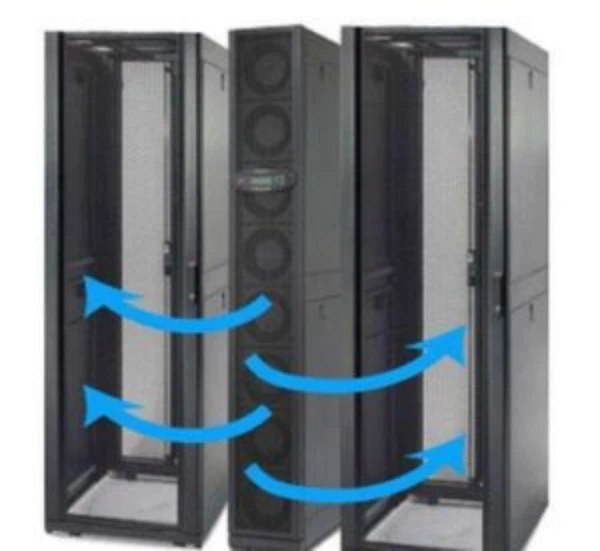
Generally, servers are placed in a dedicated computer room, where there are many fans and air conditioners to cool down the servers. The fan is installed at the forefront of the chassis, allowing a huge airflow to flow through the entire chassis. Air conditioning regulates the temperature and humidity in the computer room. This ensures that the server will not encounter problems due to high temperatures. However, this method also has many drawbacks. Firstly, both fans and air conditioners require a lot of electricity, which increases operating costs. Secondly, both fans and air conditioners produce significant noise, which affects the health of workers. Finally, neither fans nor air conditioning can completely solve the heat dissipation problem, as there are other heat sources in the computer room, such as human bodies and lighting.
In order to solve the problem of server cooling, Microsoft has come up with a very innovative solution: sink the server to the seabed! This project is called "Project Natick", and its principle is to use seawater to cool down servers. Microsoft filled some specially made steel containers with servers and connected them to submarine cables and renewable energy supplies. Then sink these containers into the seabed and operate underwater. Seawater is a great coolant that can effectively remove the heat generated by servers. Secondly, underwater data centers do not need to occupy land space and can reduce their impact on the environment. Finally, underwater data centers do not require manual maintenance and can improve reliability and security.

Huawei is also one of the world's internet giants, with millions of servers to support its various services and products. In order to solve the problem of server cooling, Huawei has come up with a very interesting solution: place the server in a hollowed out cave. This project is called "Yunshan Data Center", and its principle is to use the mountain to cool the server. Dig out a huge space inside it and then divide it into multiple levels, each with thousands of servers placed. These servers are connected through elevators and channels, and are connected to fiber optic networks and power supply.


From the above two cases, we can see that server cooling is a very challenging issue, but it is also a very creative one. Different companies have adopted different methods to cool down their servers, some of which even exceed our imagination.


