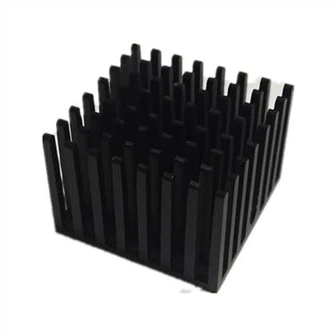
Direct chip liquid cooling technology
At present, almost all Internet traffic is transmitted through data centers. In addition to the popularity of generative AI applications such as ChatGPT, there is an unprecedented demand for computing power. Global data centers are deploying high-performance GPUs and CPUs as much as possible. This also correspondingly puts higher demands on electricity and energy.
With the development of AI and high-performance computing, the configuration of chips, servers, and racks in data centers has become increasingly dense. This high density requires more powerful cooling systems to ensure that equipment can operate within a safe temperature range to maintain system performance and reliability.

It is understood that the cooling cost of data centers has become the fastest-growing part of their physical infrastructure costs, with a compound annual growth rate of 16%. The growth rate of cooling costs in data centers exceeds existing capabilities while maintaining high-performance operations. According to data from MIT Lincoln Laboratory, by 2030, data centers will consume up to 21% of the world's electricity supply. In order to solve the energy consumption problem of AI, the industry not only develops specialized AI custom chips to improve energy utilization efficiency, but also adopts more efficient cooling technology to help data centers achieve maximum sustainability.

Recently, a company called ZutaCore showcased the industry's first dielectric direct chip liquid cooled plate for NVIDIA GPUs. This is an anhydrous, direct to chip, two-phase liquid cooling system designed specifically for AI and high-performance computing workloads. The company has partnered with numerous suppliers such as Intel, Dell, and Vitus, and multiple server manufacturers are also collaborating with ZutaCore to complete certification and testing of the Nvidia GPU platform.

ZutaCore's "HyperCool" cooling solution does not rely on liquid as the cooling medium and uses a special dielectric liquid. This cooling method directly contacts the cooling liquid onto the chip that needs to be cooled, which can more effectively absorb and remove heat compared to traditional air cooling or indirect liquid cooling. HyperCool technology can also recover and reuse the heat generated by data centers, achieving 100% heat reuse.

In addition, the current power consumption of each Nvidia H100 GPU is as high as 700 W, which is a significant challenge for data centers that are already under pressure in controlling heat, energy consumption, and space. It is understood that HyperCool can reduce cooling energy consumption by 80%, support GPUs exceeding 1500W, and increase rack density by 300%. Overall, cooling in data centers is a key aspect in ensuring hardware efficiency and extending equipment lifespan. With the increase in data center scale and computing demand, efficient cooling solutions are becoming increasingly important.

By continuously providing optimized cooling, the hardware of the data center can continue to operate at high performance levels, avoiding performance fluctuations caused by temperature issues, thereby achieving computing power far beyond traditional facilities. This is particularly crucial for applications that rely on high-performance computing, such as artificial intelligence and big data analysis.