Do SSDs require external heat sinks in the future
So far, each generation of CPU and GPU has achieved stable performance improvement, but it is difficult to say how much effect behind the performance improvement can be attributed to the rising power consumption. Every new generation of products will introduce the improvement in energy consumption ratio during the promotion, but higher TDP and measured power consumption, as well as larger and heavier graphics card cooling, should not be ignored.

The same goes for NVMe SSDs. Since the era of PCIe 4.0, the gradually improved continuous and random read and write performance has raised higher requirements for the heat dissipation of storage particles and main control chips. Lightweight special material heat dissipation patches have become the basic configuration, and more high-end flagship products will choose their own heat dissipation vest to provide SSDs with a larger soaking area and passive heat dissipation ability. For PCIe 5.0 products that are about to enter the market, the heat generated by high performance may only increase without decreasing, and users who pursue long-term stable performance will inevitably need further heat dissipation capabilities.

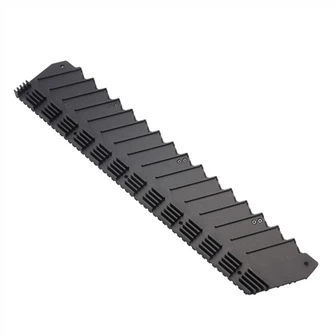
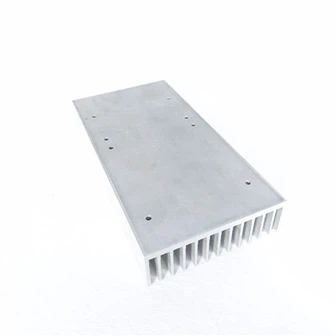
There are already many external SSD heat sinks available on the market, which can be divided into passive and active solutions.
The passive SSD heat sink is similar to some products that come with their own heat dissipation vest, but it can choose a more flexible design, with tower style heat sinks and heat pipes connecting the heat sinks adapted to the chassis with sufficient internal space, providing a larger overall heat dissipation and wind receiving area, and making good use of the air ducts generated by the chassis fan. The advantages of this type of passive heat sink are obvious: no noise, no need for wiring, and full utilization of the chassis air duct. The disadvantages are that it takes up more space than a regular vest and is difficult to adapt to other devices such as PS5.

The active SSD heat sink is more similar to the air-cooled heat sink used by CPUs, consisting of a combination of fans and heat sinks, with various combinations. The advantage of an active heat sink is that it is not too affected by the chassis environment and can provide stable air flow.

Gernally speaking , both types of SSD heat sinks have their own advantages and disadvantages in terms of principle and functional characteristics. In terms of the current mainstream PCIe 4.0 SSD performance and heat generation level, as long as it is not used in high-temperature environments for a long time, basic heat dissipation patches or vests combined with chassis air ducts are sufficient to maintain its performance stability. External active and passive heat sinks are mainly used as a precautionary measure for PCIe 5.0 SSDs, as well as for users who pursue extreme performance and other special scenarios.