Do you really know the working principle of high-power LED vapor chamber?
The vapor chamber is a vacuum chamber with a micro structure on the inner wall, usually made of copper. When the heat is transferred from the heat source to the evaporation zone, the cooling liquid in the cavity begins to vaporize after being heated in a low vacuum environment. At this time, it absorbs heat energy and expands rapidly, and the cooling medium in the gas phase quickly fills the whole In the cavity, when the gas phase working fluid comes into contact with a relatively cold area, it will condense. Through the phenomenon of condensation, the heat accumulated during evaporation is released, and the condensed cooling liquid will return to the evaporation heat source through the capillary channel of the microstructure, and this operation will be repeated in the cavity.

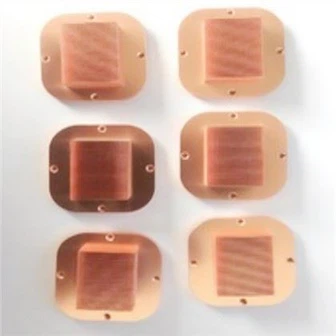
The vapor chamber is usually used for electronic products that require a small volume or need to quickly dissipate the heat. At present, it is mainly used in products such as servers and high-end graphics cards devices. It is a strong competitor of heat pipe cooling method. The vapor chamber is a flat plate-like shape in appearance, with a cover on the top and bottom of each other tightly.
There is copper pillar support inside. The upper and lower copper sheets on the vapor chamber are made of oxygen-free copper, usually pure water as the working fluid, and the capillary structure is made by the process of copper powder sintering or copper mesh. As long as the uniform temperature plate maintains its flat characteristics, the shape of the outer shape depends on the application of the heat dissipation module environment, and there is no restriction on the angle of placement when used. In actual application, the temperature difference measured at any two points on the plate can be less than 10°C, which is more even than the heat conduction effect of the heat pipe on the heat source, The thermal resistance of the common temperature equalizing plate is 0.25℃/W, and it is applied to 0℃~150℃.
Four main steps of solidification. The vapor chamber is a two-phase fluid device formed by pouring pure water into a container full of microstructures. Heat enters the plate through heat conduction from the external high temperature area, and the water around the point heat source will quickly absorb the heat and vaporize into steam, taking away a large amount of heat energy. Reusing the latent heat of water vapor, when the vapor in the plate diffuses from the high pressure area to the low pressure area (ie, low temperature area), when the vapor touches the lower temperature inner wall, the water vapor will quickly condense into a liquid and release heat energy. The condensed water flows back to the heat source by the capillary action of the microstructure, completing a heat transfer cycle, forming a two-phase circulation system in which water and steam coexist. The vaporization of the water in the uniform temperature plate continues, and the pressure in the cavity will maintain a balance as the temperature changes. Water has a low thermal conductivity value when it is operated at low temperatures, but because the viscosity of water changes with temperature, the soaking plate can also operate at 5°C or 10°C. Since the liquid return is effected by capillary force, the vapor chamber is less affected by gravity, and the application system design space can be used at any angle. The temperature equalizing plate does not require power supply or any moving components. It is a completely sealed passive device.