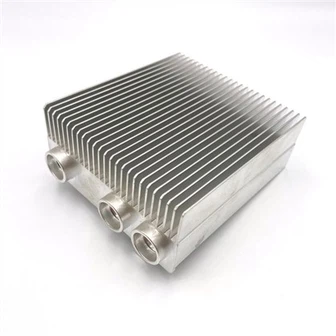
Dynamics of the data center liquid cooling industry
With the innovative development of technologies such as artificial intelligence, cloud computing, big data, and blockchain, the era of 5G communication characterized by high speed, low latency, and large connectivity has arrived. As information infrastructure, data centers and communication equipment are bearing an increasing amount of computing load, and the requirements for computing efficiency are also increasing.
In order to meet the challenges of network processing performance, data center servers and communication devices continuously improve their processing capabilities and integration, resulting in a continuous increase in power density. These changes not only bring about huge energy consumption issues, but also higher requirements for refrigeration equipment and technology due to high heat density. Traditional air cooling technology presents a bottleneck in the face of high heat density scenarios, and the heat dissipation efficiency can no longer keep up with the computational efficiency. In this context, liquid cooling technology has attracted widespread attention in the industry due to its ultra-high energy efficiency, ultra-high heat density, and other characteristics. Liquid cooling technology is the only way to solve the challenges of heat dissipation pressure and energy conservation. More and more companies are using liquid cooling as the data center thermal solution for high performance requirement.
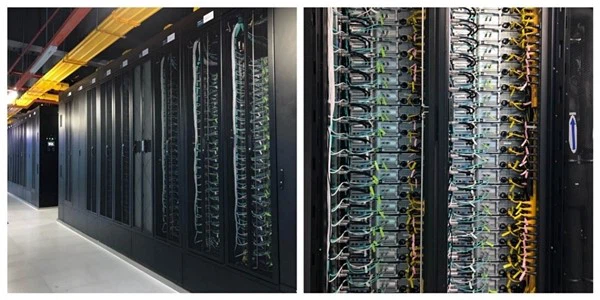
Highlander, an underwater data center company, has deployed a commercial facility in the waters near Hainan Island, China. This 1300 ton (1433 ton) system was submerged 35 meters underwater and utilized the ocean for cooling. The company stated that the module can process over 4 million high-definition images in 30 seconds, equivalent to 60000 traditional computers working simultaneously. Hailan Cloud hopes to ultimately deploy 100 such modules at the location, which is said to save 68000 square meters of land, as well as 122 million kilowatt hours of electricity and 105000 tons of fresh water per year.

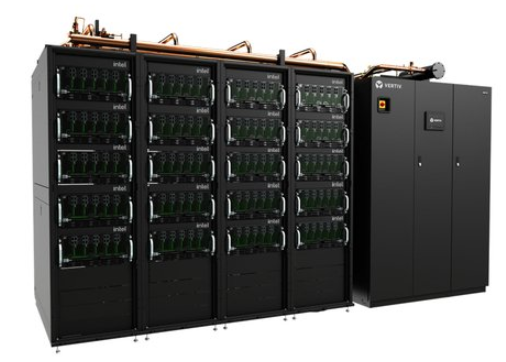
Intel's Gaudi processor is designed specifically for AI training and is touted as a "clear alternative" to the market leading Nvidia. The Gaudi2 processor was launched in 2022 for Intel's AI supercomputer built for Stability AI, with chips manufactured by TSMC. Intel's Gaudi3 AI accelerator will be launched in 2024, and it will collaborate with Vertiv to develop two-phase liquid cooling. These systems will use a pumped two-phase (P2P) cooling system aimed at removing up to 160kW of heat using water at 17 ° C to 45 ° C (62.6 ° F to 113 ° F). The alternative solution for air-cooled data centers can reach up to 35 ° C (95 ° F) and a heat load of up to 40kW. Vertiv stated that these systems will not use PFAS, and the health risks that PFAS may bring hinder the development of other two-phase cooling products.
The UK and Nordic supplier Verne Global has introduced liquid cooling in their underground data center park in Finland. Verne collaborated with Dell and Intel to provide direct liquid cooling (DLC) for systems installed in the Rock data center, located in a former military tunnel in the Poli bedrock approximately 200 kilometers from Helsinki.

Infosys, an Indian IT service company, has adopted immersion cooling fluid from Shell New Energy UK. The company plans to create an integrated green data center product based on Infosys's Topaz AI platform, cooled by Shell immersion coolant (a single-phase synthetic immersion coolant). Infosys's announcement indicates that data centers account for approximately 1.5% of global electricity generation, and carbon dioxide emissions may account for 1% of global electricity generation. Generative artificial intelligence is expected to significantly increase this growth, and Infosys claims that liquid cooling can help as it will reduce some energy usage. The company believes that immersive cooling can reduce the energy consumption of future artificial intelligence systems, although the overall impact of more artificial intelligence systems will still be an increase in energy. Specifically, the company claims that liquid cooling can reduce energy use by 48%.

At present, air cooling technology is one of the most mature and widely used cooling solutions in data centers. In recent years, under the "dual carbon" policy, the PUE index of data centers has been continuously reduced, and most regions require that the electricity utilization efficiency should not exceed 1.25, and actively promote the upgrading and transformation of data centers. With the accelerated deployment of servers, how to further reduce energy consumption and achieve green development of data centers has become the focus of industry attention.