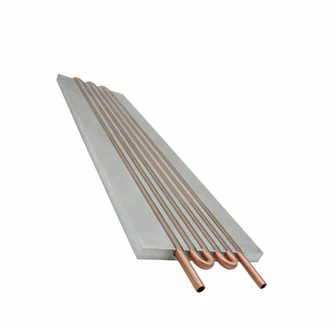
Exploring the Possibilities of Liquid-Cooled Thermal Solutions
As technology advances, devices continue to become more powerful and compact, but require more efficient thermal solutions to avoid overheating. This is where liquid cooling comes in, which offers many advantages over traditional air cooling systems. In this blog, we will explore the possibilities of liquid cooling for thermal solutions.
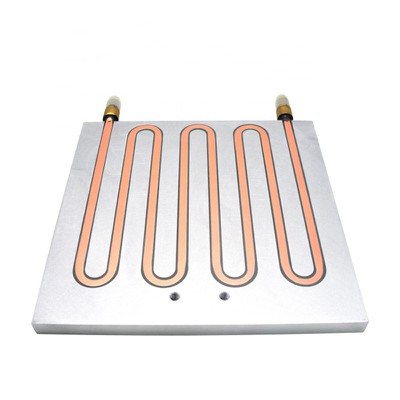
1. Improve heat dissipation
Liquid cooling systems are generally more efficient at moving heat away from a device than air cooling systems. Liquids absorb heat more efficiently than air, allowing it to move away from hot spots and dissipate it more quickly. As a result, liquid cooling systems can significantly reduce equipment temperatures while reducing thermal stress and extending equipment life.
2. Enhanced performance
By maintaining a cooler operating temperature, liquid cooling systems can improve equipment performance. This is a key aspect of high-performance computing and gaming, and even a slight temperature reduction can translate into better performance. Additionally, liquid cooling systems allow for greater overclocking potential since they can handle more heat.
3. Runs more quietly
Liquid cooling systems produce less noise than air cooling systems because they don't require large fans. This makes them ideal for applications where noise levels are a concern, such as recording studios or libraries.
4. More compact design
Liquid cooling systems are typically more compact than air cooling systems, making them a suitable choice for devices with limited space for thermal management. Additionally, liquid cooling systems offer greater flexibility in design, allowing manufacturers to use more compact form factors and optimize equipment space.
5. High cost performance
While the initial cost of liquid cooling systems may be higher than traditional air cooling systems, their energy efficiency can save energy bills over time. Additionally, liquid cooling systems can reduce maintenance costs by providing longer equipment life with fewer breakdowns and repairs.
6. Environmental protection
Since liquid cooling systems can significantly reduce device temperatures and reduce thermal stress, they contribute to a greener environment. Liquid cooling systems offer a more energy-efficient solution because they require less energy to cool equipment.
in conclusion
In conclusion, liquid cooling systems are proving to be an increasingly popular and effective cooling solution. Their advantages include heat dissipation, enhanced performance, quiet operation, more compact design, cost-effectiveness and environmental benefits, making them an attractive solution for many applications.
As devices continue to get smaller and more powerful, the need for more efficient thermal solutions will only increase. While air cooling systems have historically been the go-to solution for thermal management, it is clear that liquid cooling systems have numerous advantages that make them a viable option today and in the future.