How does 3D Printing Technology helps heatsink Performance Improvement
A heatsink is a collective term for a series of devices used to conduct and release heat. Modern life cannot do without it, from small phones and smartwatches to large cars and airplanes. At present, the mainstream radiators in the Chinese market mainly include heating radiators, computer radiators, etc. Among them, heating heatsinks can be divided into several types based on material and working mode, such as steel radiators, aluminum radiators, copper radiators, etc. Computer heatsink can be divided into air-cooled heatsink, heat pipe heatsink, liquid cooled heatsink, etc. based on their use and installation methods.

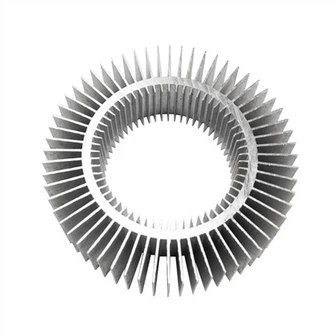
Traditional heat sinks are square structures composed of fins and base plates. Its volume and weight are relatively large, and the manufacturing process is relatively cumbersome, which can only achieve simple medium channel shapes/paths. More complex channels can easily lead to increased flow resistance and dead zones in the medium, resulting in a significant decrease in heat dissipation rate.

3D printing technology allows key heat sink structures to be no longer limited to the shape of fins, and the shape of the working area can also be transformed from a simple square shape to a wrapped structure that matches the equipment/parts. In addition, the components can be formed as one without the need for extensive welding processes, and the overall structure is more lightweight. The medium channel can be integrated with the components for molding, with the advantages of complex paths, large contact surfaces, and high heat exchange rates. 3D printing manufacturing frees the cooling channels from the limitations of cross drilling. Internal channels can be designed closer to the cooling surface of the mold, with smooth corners, faster flow, and increased efficiency in transferring heat to the coolant.

At present, 3D printing heat exchangers and heat sinks are widely used in precision manufacturing fields such as aerospace, military, automotive, molds, server chips, etc. Relevant enterprises are conducting research and application, and have made certain progress, solving many problems that traditional heat exchange equipment cannot solve.