Advantages and disadvantages of liquid cooling and air cooling in energy storage systems
With technological progress and capacity expansion, the global development of "new energy+energy storage" has entered a fast lane in recent years. After preliminary exploration and practice, the positioning and business model of energy storage in the power system have become increasingly clear, and the conditions for the large-scale development of the energy storage industry have become more mature. At a critical juncture in the accelerated development of the energy storage market, safety issues have become a key issue of common concern in the industry, and the importance of energy storage temperature control continues to increase.
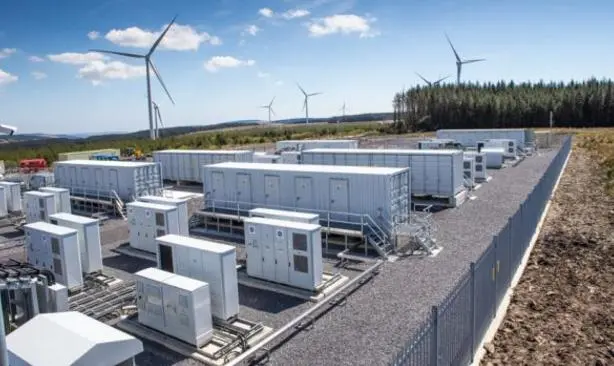
Liquid cooling and air cooling are two common cooling methods for energy storage systems, which have significant advantages and disadvantages in terms of performance, price, and development trends.
The liquid cooling cooling method has some significant advantages in terms of performance. Due to the liquid cooling system being able to directly contact the cooling medium with the heat source, the heat dissipation efficiency is relatively high. The heat capacity of liquid cooling media is large, which can absorb more heat and improve heat dissipation efficiency. This is particularly important for high power density energy storage systems, as it can maintain system temperature stability, improve system reliability and lifespan.

However, the air-cooled cooling solution is relatively weak in terms of performance. It exhausts hot air through a fan, resulting in relatively low heat dissipation efficiency. Especially in high-temperature environments, air-cooled systems may not be able to effectively reduce the temperature of energy storage systems, which may lead to system overheating, affecting performance and lifespan.
The liquid cooling cooling method is relatively expensive in terms of price. The liquid cooling system requires additional cooling equipment and pipelines, which increases the complexity and installation cost of the system. In addition, the maintenance and operation of liquid cooling systems also require professional technical and equipment support, which increases operating costs.
In contrast, air-cooled cooling is more cost-effective in terms of price. Due to the relatively simple structure of the air-cooled system, it does not require additional cooling equipment and pipelines, reducing the complexity and installation cost of the system. Meanwhile, the maintenance of the air-cooled system is relatively simple and does not require regular replacement of cooling media, reducing operating costs.

From the perspective of development trends, liquid cooling cooling methods are gradually receiving more attention and adoption in energy storage systems. As the power density of energy storage systems increases, the demand for heat dissipation performance is also increasing. Liquid cooling systems can provide more efficient heat dissipation and better meet the needs of high-power density energy storage systems. Therefore, the application of liquid cooling in future energy storage systems may become increasingly common.