How important is the heat dissipation of LED video lights?
When buying an LED video light, whether it is for taking photos or video, the first consideration is how the light effect of the light is to ensure the quality of the picture. This is undoubtedly also the first choice for lighting. One hard condition: LED lights with high CRI, high brightness and full spectrum.
After selecting the first layer, you have to consider the second layer: heat cooling.
How important is heat dissipation? We all know that luminescence must generate heat. Although LED is a cold light source, it is only for its light-emitting principle. When electrical energy is converted into light, part of the energy generates heat. If the heat dissipation of the LED lamp is not ideal, this part of the heat is It can’t be ruled out quickly, so due to the relatively small size of the LED package, a large amount of heat energy will be accumulated in the LED lamp, and the high temperature of the lamp panel will directly cause the life of the LED itself to be reduced.

Generally, when electronic equipment is used for a long time, some materials will be easily oxidized. As the temperature of LED lamps rises, these materials will be repeatedly oxidized at high temperature, the quality will be reduced, and the service life will be shortened. The common problem of semiconductor heat sources is that when the temperature of the LED rises, the electrical resistance increases, which leads to an increase in current, and the increase in current leads to an increase in heat. In this way, the reciprocating cycle will cause more and more heat, which will eventually cause electronic components to overheat and damage, causing electronic failures.

LED lamp beads in a high-heat state are prone to deviations in their CRI and color temperature, which may not be visible to the naked eye, but they can be felt in the picture taken by the high-definition camera, and if the shooting equipment is not automatic white balance, it may be possible There will be differences in color temperature before and after.
Nowadays, the heat dissipation of LED film and television lights mainly starts from four aspects:
Use high-quality power supply to reduce the fluctuation of current, which can reduce the heat of LED. The driving power supply of Neos lighting combines high-precision constant current technology, adjustable current, and equipped with active PEC function to achieve a wide voltage working range, which improves the reliability of the lamp as much as possible, and achieves long-term stability. Work.
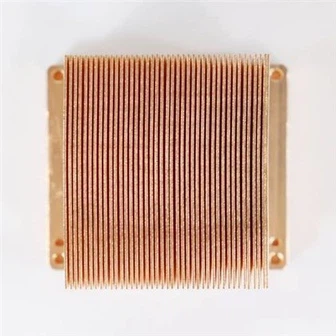
The lamp body is made of materials with better heat dissipation performance. Compared with engineering plastics, aluminum shells often have better heat dissipation performance. Copper can also be used, but it will greatly increase the cost. Therefore, aluminum is used more, and copper will be used as the metal substrate of the LED to achieve rapid heat conduction.
The silent fan is matched with the hollow lamp body to enhance air convection and heat dissipation. The built-in long-life and high-efficiency silent fan of Neos Television lights keeps the working noise below 30 decibels. It is suitable for shooting scenes with extremely high requirements on radio. The silent fan discharges the heat conducted from the lamp head into the air at a constant speed to ensure that the temperature of the lamp head is not too high. .
Advanced heat pipe cooling system. The use of this technology in terms of heat dissipation performance is not common in LED film and television lights, and it is also a greater cost to improve performance. The heat pipe uses heat pipe technology to conduct heat from the LED chip to the heat dissipation fins of the shell to provide the light With the intelligent temperature control mechanism, the thermal resistance is reduced infinitely, and the temperature is stably controlled, so that the temperature of the COB lamp panel is always kept within the range of not damaging the life of the lamp bead, ensuring continuous and stable light source output.