How to improve IGBT Module thermal performance
If the power of IGBT module is constant and the thermal resistance between IGBT shells is constant, the thermal resistance between IGBT shell and hetasink is related to the material and contact degree of hetasink, but the thermal resistance here is small, so the change of material and contact degree of radiator has little impact on the whole heat dissipation process.

The cooling process of IGBT module is as follows: the power loss of IGBT on the junction; The temperature on the junction is transmitted to the IGBT module shell; Heat conduction heatsink on IGBT module; Heat from the heatsink is transferred to the air.
There are two main factors affecting its heat dissipation, one is the total loss, the other is the thermal resistance of the heatsink. However,due to the limitations of output power and actual working conditions, the total power loss of IGBT can not be changed, so what needs to be considered is how to change the thermal resistance from radiator to air or other media.

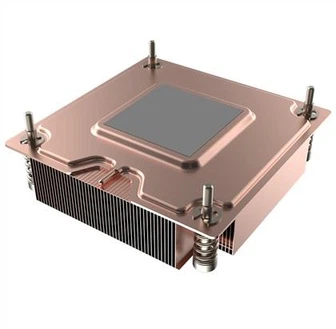
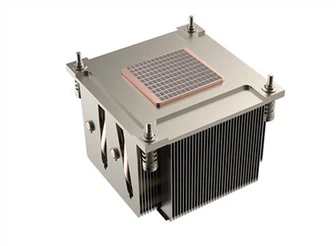
The temperature rise generated by the dissipated power of the power device needs to be reduced by the thermal heatsink. Through the heatsink, the heat conduction and radiation area of the power device can be increased, the heat flow can be expanded and the heat conduction transition process can be buffered, and the heat can be transmitted directly or through the heat conduction medium to the cooling medium, such as air, liquid or liquid mixture.
Natural air cooling:
Natural air cooling refers to the realization of local heating devices to dissipate heat to the surrounding environment without using any external auxiliary energy, so as to achieve the purpose of temperature control.It usually includes heat conduction, convection and radiation. It is suitable for low-power devices and components with low requirements for temperature control and low heat flux of device heating, as well as sealed or densely assembled devices that are not suitable or do not need other cooling technologies.

Forced air cooling:
Forced convection air cooling is characterized by high heat dissipation efficiency, and its heat transfer coefficient is 2-5 times that of self cooling.Forced convection air cooling is divided into two parts: fin heat sink and fan. The function of the fin radiator in direct contact with the heat source is to lead out the heat emitted by the heat source, and the fan is used to force convective cooling to the heatsink, so as to force air cooling, which is mainly related to the material, structure and fins of the radiator. The greater the wind speed, the smaller the thermal resistance of the radiator, but the greater the flow resistance. Therefore, the wind speed should be appropriately increased to reduce the thermal resistance. After the wind speed exceeds a certain value, the impact of increasing the wind speed on the thermal resistance is very small.

Heatpipe heatsink cooling:
The heat pipe is a heat transfer element with high thermal conductivity. It realizes extraordinary heat transfer effect with unique heat transfer mode. The utility model has the advantages of strong heat transfer ability, excellent temperature equalizing ability, variable heat density, no additional equipment, reliable operation, simple structure, light weight, no maintenance, low noise and long service life, but the price is expensive.

Liquid cooling:
Compared with air cooling, liquid cooling significantly improves the thermal conductivity. Liquid cooling is a good choice for power electronic devices with high power density. The liquid cooling system uses the circulating pump to ensure that the coolant circulates between the heat source and the cold source to exchange heat.The heat dissipation efficiency of water-cooled radiator is very high, which is equal to 100-300 times of the heat transfer coefficient of air natural cooling. Replacing air-cooled radiator with water-cooled radiator can greatly improve the capacity of devices.