How to manage the thermal issue of power supply
When the power supply works, it will generate heat, and the continuous temperature rise will impact the performance, which may eventually lead to the system failure, in addition, overheating can shorten component life and affect long-term reliability.
Thermal management solutions
Thermal management follows the basic principles of physics, and heat can be transmitted in three ways: radiation, conduction and convection. For most electronic systems, the required cooling is achieved by conducting heat away from the heat source and then transferring it elsewhere by convection, thermal design requires the combination of various thermal management hardware to effectively achieve the required conduction and convection, the three most commonly used cooling elements are heat sinks, heat pipes and fans,
the radiator and heat pipe are passive cooling systems without power supply, while the fan is an active forced air cooling system.
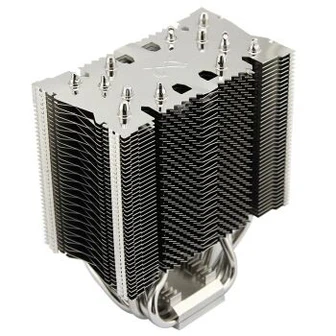
heat sinks are made of aluminum or copper that take heat from a heat source by conduction and transfer it to an air stream (in some cases, water or other liquid) to enable convection.
Radiators come in thousands of sizes, specifications and shapes, from small stamped metal fins connected to a single transistor to large extruded pieces with many fins (finger shapes) that intercept the flow of convective air and transfer heat to that flow. Radiators have the advantages of no moving parts, running costs, failure modes, etc. Once the heat sink is connected to the heat source, convection naturally occurs as the warm air rises, starting and sustaining a flow of air.
Although radiators are easy to use, there are some disadvantages:
Radiators that transmit large amounts of heat have to have large size, expensive cost and heavy weight, and must be placed correctly, which will affect or limit the physical layout of the circuit board;
The fins may be blocked by dust in the air stream, reducing efficiency;
It must be properly connected to the heat source so that heat can flow smoothly from the heat source to the radiator.
Heat pipe
It is another important component of the thermal management and can transfer heat from point A to point B without any form of active force mechanism. A sealed metal tube containing a sintering core and working fluid, which does not act as a radiator itself, absorbs heat from a heat source and transfers it to a cooler area. Heat pipes can be used when there is not enough space to place a radiator near a heat source or when airflow is insufficient, heat pipes work efficiently and can transfer heat from the source to a more manageable location.
the working principle of heat pipe is simple and ingenious:
The heat source converts the working fluid into steam in the sealed tube, and the steam carries heat to the cooler end of the heat pipe, at this end, the vapor condenses into a liquid and gives off heat, and the fluid returns to the hotter end. This gas-liquid transition process operates continuously and is driven only by the temperature difference between the cold and hot ends, connecting a radiator or other cooling device at the cold end can solve the heat dissipation problem of the local hot spot where the air flow is blocked.
Fan
It is the first step towards active radiators with forced air cooling, it can accelerate dissipating the heat out and cool down the power supply system.
Sinda Thermal is a professional heat sink manufacturer, we are providing varieties of heat sink types to the global customers, and we are very experienced in power supply thermal management. Please contact us freely if you have any thermal requirements.