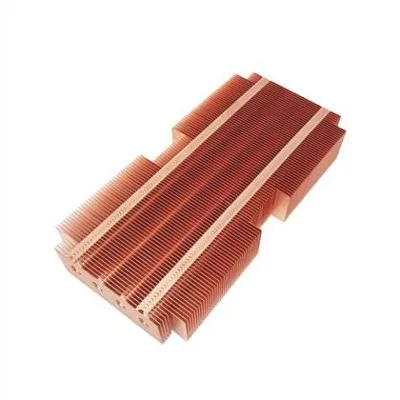
How to use heatsink and inter face material for thermal solution
 A good thermal management is very important to ensure the performance and reliability of electronic devices. This is conceptually simple. First, transfer the excess heat from the heat source and disperse it to a larger area to achieve effective heat dissipation and cooling. But in many cases, the implementation process is challenging.

The surface of heating devices is usually not smooth enough and there is no low thermal impedance to ensure good heat transfer. The surface of some devices is not planar, which increases the challenge of thermal management. In addition, the components that need to be cooled may be located deep in the system, and it is more complicated to discharge the heat that may cause damage.
Except thermal grease,TIM materials can also be a choice,it can provide the sustained low thermal resistance required for effective heat transfer while eliminating any pollution problems. In order to meet specific system requirements, Tim can adopt vertical heat transfer or transverse heat dissipation structure. Tim has a variety of thicknesses to choose from to meet the requirements of specific applications. It has mechanical stability and good reliability at high operating temperatures. Tim can also provide high electrical isolation and simple application.

TIM is placed between the heat source and cooling components to improve thermal coupling and heat flow. Two factors can improve the efficiency of thermal coupling. Firstly, Tim can adapt to the micro surface irregularity and eliminate all insulating air that reduces the interfacial thermal conductivity. Secondly, Tim has the thermal conductivity required to effectively transfer heat from the source to the cooling components.

Synthetic graphite based TIMs have the highest level of thermal conductivity, such as we-tgs series synthetic graphite fins, which combine the characteristics of high thermal conductivity, light weight and thickness (0.03 mm), and are suitable for various applications from high-power semiconductor modules to handheld devices.
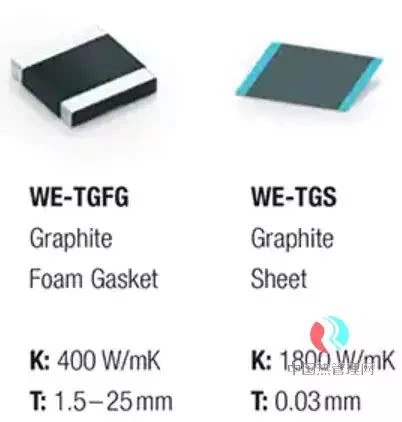
Besides, TIMs can also be combined to provide higher performance. Graphite materials can be combined with silicon gel material to use the heat sink whose base surface exceeds the heat source and improve the cooling capacity of the whole cooling module.

Thermal management is a common problem in electronic system design. As mentioned above, design enigneers can use TIM of various materials, including silicon gel, phase change material, graphite and foam pad. The use of Tim can effectively eliminate any heat transfer problems that may occur at the same time.