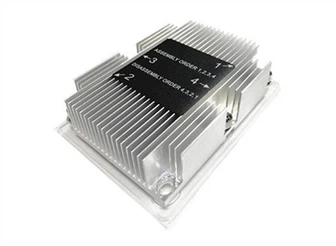
Internal structure of 3D printing server cold plate technology
The internal structure of the server's liquid cooling plate has a significant impact on heat transfer efficiency. The optimal design can maximize the heat exchange area between the cooling plate and thermal components such as the CPU or GPU, thereby ensuring efficient heat transfer.

For example, microchannels or fins inside the cold plate can enhance the diffusion of heat, thereby achieving better heat dissipation performance. The flow patterns and turbulence induced characteristics within the cold plate have been carefully designed to ensure that the coolant effectively absorbs and carries away heat. Maximizing contact surfaces, increasing surface area, optimizing flow patterns, and selecting appropriate thermal conductive materials can all improve cooling performance.

3D printing can accurately design complex geometric shapes within the cold plate, allowing for the creation of complex customized structures and optimizing the heat transfer between the internal structure of the cold plate and the coolant. In addition, 3D printing technology utilizes complex simulation to achieve fine structures that cannot be manufactured by traditional processing methods, achieving multiple optimizations of the internal structure of the cold plate on flow rate, pressure drop, thermal resistance, and efficiency.

The development prospects of 3D printing in the thermal management industry are widely recognized, but it also faces several challenges:
Material selection: The range of high thermal conductivity materials suitable for 3D printing is limited, which may limit the design choices of heat sinks and cooling components.
Manufacturing quality: achieving precise and consistent manufacturing quality, as changes in printing quality can affect the thermal performance of components.
Simulation and optimization: The design complexity brought about by 3D printing may require advanced simulation and optimization tools to ensure that the final product meets thermal management requirements.
Reliability: The long-term durability and reliability of 3D printing thermal solutions in harsh high heat environments are also of concern, which requires a comprehensive testing and validation process.
Balancing cost and performance: Adopting an integrated 3D printing strategy can achieve more reliable performance and lower thermal resistance, but optimizing costs by adopting local 3D printing design in critical heat transfer areas is also worth considering.
All in all , overcoming these challenges is crucial for the sustained development of 3D printing in thermal management applications.