LED cooling thermal solution
With the different capabilities of manufacturers, the LED industry is divided into two modes: focusing on high-tech level and high gross profit, as well as general technical level and low gross profit. There are also two ways to give consideration to each other. As for LED thermal cooling technology, with the rapid development and continuous progress of related technologies, in order to create applications with high gross profit and high added value, but the related development cost and difficulty are also one of the reasons why many manufacturers choose other products.

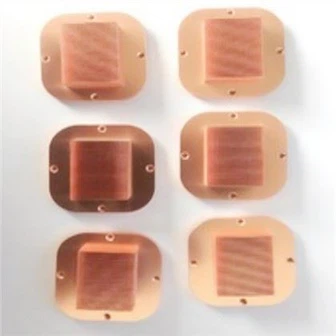
There is a new LED thermal cooling technology VC, which is also called, the vacuum temperature equalizing plate . Its principle is very simple. It is to establish an internal hollow metal object by extracting air, and then fill the hollow part of the metal object with saturated vapor material of special medium and homogeneous material.

This structure is very similar to the circulating pipeline system of liquid cooling . As long as the high-power LED lights up, the heat generated by the LED will make the liquid substances in the metal of the vapor chamber next to the LED vaporize into a gas state, and the gas with heat will diffuse to the gas chamber connected to the other side of the vacuum temperature equalizing plate, The heat will be released through other heat dissipation materials in this area, and the cooled gas will enter a material liquefied into liquid state due to temperature and flow back to the vacuum temperature equalizing plate next to the original heating LED.

As long as the process of vaporization and liquefaction continues to circulate, the heating capacity of LED light source can be brought out automatically, so as to reduce the problem of brightness attenuation (light attenuation) of LED light source and prolong the service life of LED. Manufacturers can further give full play to the stronger luminous efficiency of high-power LED and achieve higher lumens per watt.

Since the vapor chamber does not need to be used like other heat dissipation methods, it is a set of thermal cooling system operating in a completely passive state, which is very helpful to the development of LED cooling technology.