Military product design waterproof and heat dissipation analysis
Military product design needs to pay attention to waterproof and heat dissipation. The difficulty of designing military night vision devices poses considerable challenges to industrial design companies. Industrial design companies lacking design experience can hardly take up the important task. Military night vision devices work in harsh outdoor environments for a long time. Dust, fall prevention, salt spray, high and low temperature, etc. are indispensable to ensure stable and accurate working conditions. The difficulty of designing military night vision devices is not a simple matter of three words.
The product design of military night vision device is waterproof. The focus is on the interpretation of the sealing process. The sealing surface is made of silicone material with good sealing and elasticity, and flat contact should be used as much as possible. Do not use complex curved surfaces, and simplify the design to improve reliability and firmness. The width of the sealing ring should be as large as 1.5mm and the thickness should be reasonable to ensure the amount of interference. The sealing ring needs to be assembled in a regular groove, must be closed design, and a retaining wall is designed around it. All sealing parts of the plastic case must be polished, including the mating surface with double-sided tape and silicone material. The sealing part must not have traces such as ejector pins, sliders, gates, etc., and must have mold and molding defects such as material, weld marks, shrinkage, etc. , And ensure that the sealing surface has sufficient strength and rigidity.
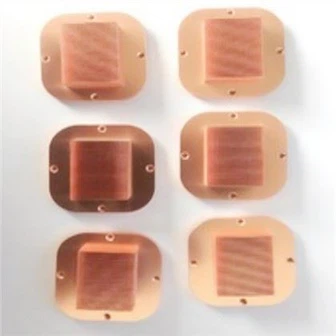
The heat dissipation of military night vision products design. Heat dissipation and waterproofing are a pair of contradictions. If you want to solve it completely, the product structure engineer has to wring his brains and work hard to find a solution. Usually, Bolatu does this, using the heat sink to conduct heat to set it up. Then design the cavity to drain to the outside through the fan. This solution is feasible if IP67 waterproof is not encountered. Obviously, the method of drainage alone is still single, and the heat dissipation can be solved. However, there is a problem with waterproofing. In the communication and experimentation of product structure design engineer Duolun, a novel method was found to be a "drain" around the shell. Water cannot invade the copper walls and iron walls, nor will it affect the work of electronic components. There are always more methods than problems. As long as you are willing to think of a solution, the problems will not be broken.