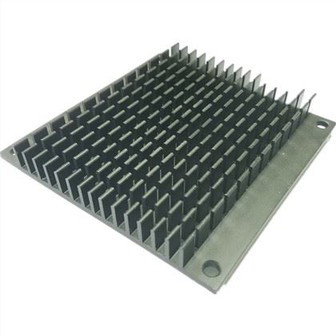
Multi platform liquid cooling plate application
Currently, data centers have become the core infrastructure supporting innovative development in various industries. With the rapid development and continuous consolidation of the digital economy and computing power base, the power consumption of chips and servers is gradually increasing. The traditional air-cooled cooling mode is unable to cope with the challenges of high heat density and high power consumption. In this context, liquid cooling technology has gradually shifted from being an optional option for data center cooling to a mandatory option due to its advantages of high efficiency, energy conservation, and low noise. Moreover, among the numerous solutions of liquid cooling technology, cold plate liquid cooling has become a new favorite in the field of data center cooling due to its unique advantages. As a leading provider of computing product solutions in China, Boyd has already successfully launched copper cooled plate liquid cooling product solutions that support the Intel Whitley platform and Eagle Stream platform, thanks to its profound technological accumulation and innovation capabilities.
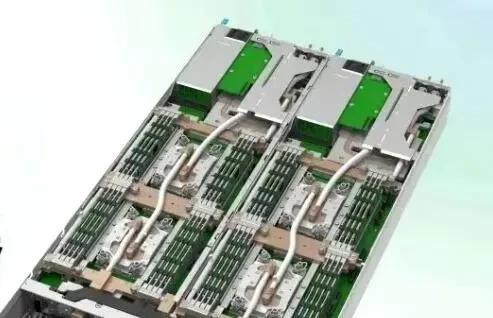
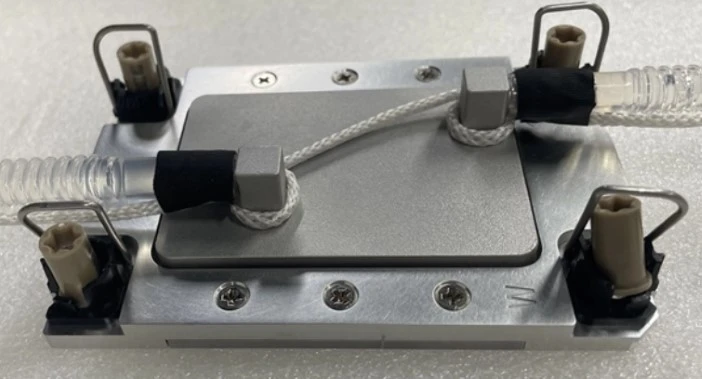
The current mainstream cold plate liquid cooling solution is to use copper as a closed chamber to indirectly transfer the heat of the heating device to the cooling liquid enclosed in the circulation pipeline, and then take away the heat through the flow of the cooling liquid. In order to further optimize the cost and weight of liquid cooling servers, Boyd closely collaborates with Intel and Invac to lock in liquid cooling design solutions based on aluminum cooling plates, strengthen joint research and development, and conduct strict testing and verification. Through comprehensive verification and analysis, the selection of aluminum materials not only makes the system more lightweight and the process more flexible, but also significantly reduces costs, providing significant economic advantages for the promotion and application of liquid cooling technology. For example, using aluminum cold plates reduces the weight by about 45% compared to copper cold plates, which not only reduces the design requirements for the chassis and packaging, but also makes the processing technology more convenient and efficient, which is conducive to achieving large-scale production of products. At the same time, the production cost of the aluminum cold plate solution can be reduced by about 20%, providing a more cost-effective cooling solution for data center construction.
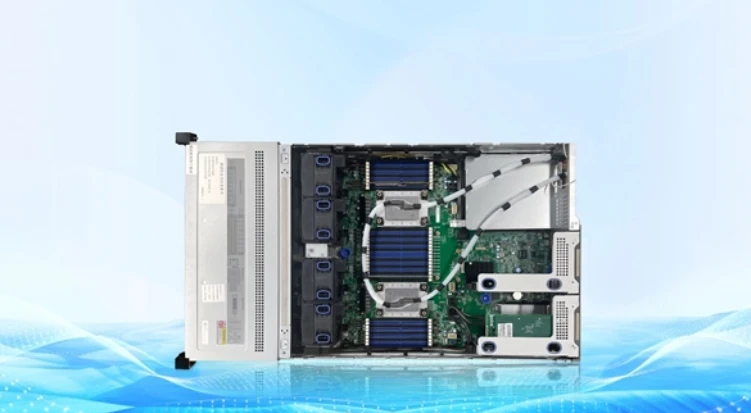
Through a series of strict long-term tests and actual operation verification on the Eagle Stream platform, the aluminum cold plate liquid cooling system not only demonstrates performance comparable to traditional copper cold plate systems, but also performs excellently in low thermal resistance, small temperature difference, low flow resistance, etc. It can ensure high performance, high reliability, and material compatibility for long-term stable operation, fully meeting the requirements of standardized batch delivery and large-scale commercial use.
The transformation and accelerated development of digitization and intelligence require an increasing demand for computing infrastructure such as data centers. Liquid cooling and green development of data centers have become important guarantees. In the future, we will continue to optimize and improve the full chain solution of liquid cooling products, provide efficient, reliable, and environmentally friendly heat dissipation solutions, provide more and better green energy-saving and emission reduction products and technologies, and help data centers achieve high-quality and sustainable development!