Overview and Development Trends of Thermal Industry
Thermal management is an important issue in the development of the electronic industry. The level of thermal performance directly determines the stability and reliability of electronic product operation. Among the main failure modes of electronic equipment, 55% of failures are caused by excessive temperature. The failure rate of electronic components increases exponentially with the increase of working temperature, and for every 10 ℃ increase in temperature, the system reliability decreases by 50%.

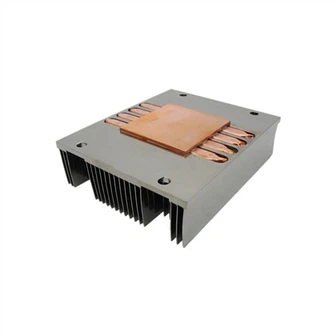
With the development of electronic appliances towards high capacity, high power density, small and lightweight, and highly integrated, small spaces and high-power will inevitably generate a large amount of heat accumulation. Temperature rise will reduce the performance and service life of electronic and electrical equipment, and bring safety hazards. Therefore, heat dissipation is a bottleneck problem that restricts the development of electrical and electronic equipment towards high power density and high integration, and the application of thermal products has become the key to solving the heat dissipation problem of electronic products. At present, thermal cooling heatsinks are widely used in industries such as flat panel televisions, computers, laptops, convenient electronic products, home appliances, network equipment, power supplies, communication, optoelectronics, lighting, automotive electronics, medical electronics, aerospace, etc.

With the arrival of the 5G era, fields such as information technology, artificial intelligence, and the Internet of Things are rapidly developing. The functions integrated on a single electronic device are gradually increasing and becoming more complex. The shrinking size of electronic products brings about a rapid increase in power density, which puts forward higher requirements for the heat dissipation performance and stability of heat dissipation materials. Taking smartphones as an example, with the widespread application of 5G technology, the CPU processing capacity and power consumption of smartphones have rapidly increased. At the same time, smartphones are constantly developing towards lightweight, intelligent, and foldable functionalities. The high integration of devices has continuously increased the risk of overheating inside the phone. The penetration of OLED screens and the popularization of wireless charging technology have also increased the demand and difficulty of phone cooling.

The downstream electronics industry has a strong demand for new thermal products. According to QY Research, the global thermal management material market will reach 10.89 billion US dollars by 2020. It is expected that the global thermal management material market will reach 13.98 billion US dollars by 2027, with a compound annual growth rate of 3.63%. In recent years, with the rapid development of downstream applications of thermal management materials and the continuous progress of industry technology, the market size of thermal management materials in China has been continuously expanding. According to the online prediction of new materials, the demand scale of China's thermal management materials market is expected to reach 15.53 billion yuan in 2020, with an expected compound growth rate of 9.69% from 2021 to 2025.