Thermal solution for 5G base station
With the advent of the information age, the demand for big data and cloud computing is becoming increasingly strong, and the demand for network speed is also increasing. As a result, mobile communication technology, material technology, and other technologies have been upgraded from generation to generation, and the performance of intelligent devices continues to improve. According to energy conservation, high performance does not come out of thin air, it requires a large amount of energy to maintain, and the most commonly used energy in our current lives is electricity; Once the current is too high, the temperature of the equipment will rise, which will shorten the service life of the equipment, and in severe cases, it may even directly burn out the equipment.

When massive data traffic demands surge like a roaring sea, coupled with high transmission rate requirements and the use of multi antenna technology in 5G, computing power consumption significantly increases. This means that 5G base stations will consume a large amount of electricity, in other words, generate a large amount of heat. If timely heat dissipation is not possible, it not only reduces the efficiency of the base station, but also easily causes damage to the base station equipment, downtime, and network disconnection due to overloaded operation. At the same time, due to signal transmission requirements, 5G base stations are often built on open mountaintops, outdoors, or rooftops, which can be said to be directly exposed to direct sunlight. Therefore, every summer, 5G base stations are "heated internally and externally", making it increasingly difficult to dissipate heat.

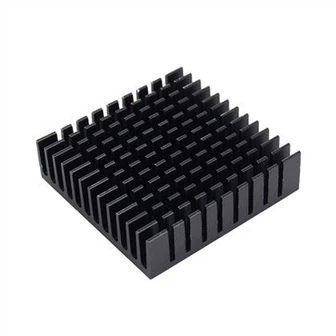
At present, the mainstream heat sink components used in 5G base stations are "semi solid die-casting parts+expansion plates". They not only have high thermal conductivity and fast heat dissipation speed, but also have advantages such as light weight and beautiful appearance, which can help 5G base stations reduce their own weight. When the shell is exposed to sunlight, its surface temperature can reach as high as 60 ℃ to 90 ℃. However, many chips require Tc to be within 90 ℃, and at this time, traditional AAU cooling schemes will not be able to meet the cooling requirements.

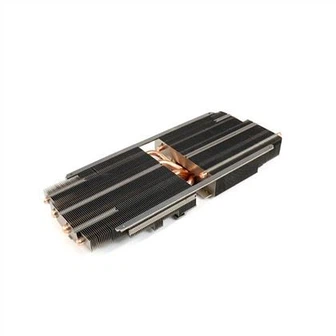
The heat generated by the internal heating module of the base station will increase the temperature inside the sealed chamber. When the temperature is consistent, it will be transmitted to the shell and dissipated through air convection. AAU heat dissipation can start with new materials, new structural designs, and new cooling solutions. Liquid cooling heat dissipation: There is a special heat dissipation liquid below the heat conduction tube connected to the heat dissipation fins, which has a relatively low boiling point. After absorbing heat, it will evaporate into gas and reach the top. After dissipating heat, it will liquefy again and return to its original location, thereby improving heat dissipation efficiency.

The introduction of large-scale antenna technology in 5G base stations poses challenges to the size, weight, and heat dissipation of AAUs. How to find a balance between the three and do a good job in AAU design requires the use of multiple new technologies, processes, and materials.