

Overview of cooling and cooling systems in medical equipment
With the rapid development of science and technology, the types of medical equipment are increasing continuously, and their applications in medical work are also becoming more and more extensive. The temperature requirements in their working environment are also very strict. In order to ensure that medical equipment works in the correct temperature environment, they are usually equipped with cooling and thermal systems. A good cooling and thermal system can ensure the safe and reliable operation of medical equipment, with low energy consumption, low maintenance rate and high work efficiency. Once the cooling and cooling system fails, it will cause the equipment components to heat up severely by the heat generated during the working process, and eventually cause abnormal conditions or even damage the medical equipment. Every year, countless medical equipments are paralyzed due to poor thermal performance in the world, which made great losses. Therefore, the research on the cooling and cooling system of medical equipment is particularly important.
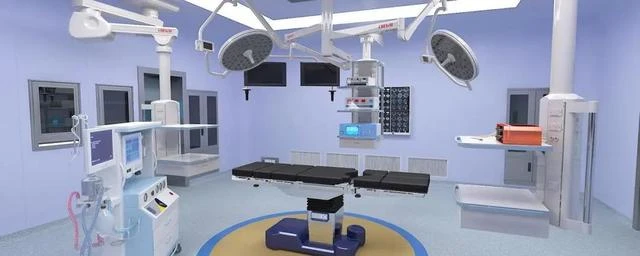
The heat source of medical equipment refers to some internal components whose temperature increasing due to rapid rotation or vibration and working under high pressure conditions during the working process of medical equipment. as the increasing temperature, these components cannot work normally, even may damage medical equipment. Through investigation and research, it is found that the heat source of medical computer includes graphics card and CPU; the heat source of ECG monitor includes circuit board and switching power supply board; the heat source of laser therapy instrument is laser emission tube; the heat source of CT machine includes X-ray tube, circuit board, detector The heat source of DSA imaging equipment includes X-ray tubes and circuit boards. The heat sources contained in the products of different manufacturers are slightly different. For example, the heat source of Siemens DSA imaging equipment includes flat panel detectors in addition to X-ray tubes; nuclear magnetic resonance imaging equipment. The heat sources include magnets, gradient field coils, radio frequency coils, and gradient amplifiers; the heat sources of linear accelerators include accelerating tubes, deflection magnets, accelerating tube coils, primary collimators, klystrons, klystron coils, and pulse transformers.
The cooling method of medical equipment
By understanding how heat is generated and transferred, we know that heat cannot spontaneously transfer from a low temperature object to a high temperature object, but can be transferred from a high temperature object to a low temperature object. Using this, people have developed cooling and thermal systems in medical equipment. , through the continuous circulation of low-temperature coolant, the heat is taken away, so that the medical equipment can work normally.
In medical work, due to the existence of heat sources inside medical equipment and many factors that affect the temperature of components inside medical equipment, more cooling and thermal solutions are taken. The cooling and cooling methods adopted by medical equipment mainly include solid radiator cooling methods, natural air cooling heat sink, forced air cooling heat sink, circulating water cooling heat sink, circulating oil cooling heat sink, and semiconductor cooling methods; different medical equipment adopts different cooling and cooling methods. Mode, small and medium-power medical equipment often uses forced air cooling to dissipate heat; electronic components or components that work under high temperature environmental conditions and have a high heat production rate during operation are more suitable for liquid cooling with relatively high cooling efficiency. For components with high heat production rate during the working process, when the conventional cooling form cannot meet the requirements, such as evaporative cooling, heat pipe, boiling evaporation, micro-channel cooling or jet cooling or even thermoelectric cooling can be used. Other cooling methods are used for cooling. A variety of large medical equipment will adopt two or more heat dissipation methods to cool and dissipate the internal components.
Cooling and cooling systems for CT machines
3.1 CT machine X-ray tube cooling module
The cooling and thermal system of a CT machine generally includes two modules, namely the X-ray tube cooling module and the scanning gantry cooling module. When the CT machine is working, the target surface of the X-ray tube of the CT machine is bombarded by the high-speed moving electron beam, and 99% of the kinetic energy of the electron beam is converted into heat energy. In order to cool the target surface, the heat on the target surface is first taken away by the high-voltage transformer oil. Afterwards, the heat dissipation of the oil by the fan ensures the reliable and stable continuous operation of the CT machine, that is, the X-ray tube uses insulating oil to exchange heat with the air.

The cooling module of the X-ray tube of the CT machine is a closed oil circulation loop. The pure high-voltage transformer oil fills the loop pipeline to insulate and protect the X-ray tube of the CT machine and dissipate heat. The components of the CT machine X-ray tube cooling module include oil circulation sensor, oil temperature sensing resistor, oil circulation pump, oil tank, heat exchanger and cooling fan, oil pressure switch and tube state detection circuit board. The oil circulation pump provides power for the circulating flow of the high-voltage transformer oil in the oil tank and heat exchanger pipes. A pulsating DC voltage signal whose frequency is proportional to the flow rate of the high-voltage transformer oil is output by the oil circulation sensor, and the oil in the oil tank will expand due to heating. , when the set pressure is exceeded, the oil pressure switch is closed, and an oil pressure error signal is given at the same time. The oil temperature detection resistor detects the temperature of the high-voltage transformer oil. When the temperature of the oil in the oil tank increases, its resistance value decreases. The oil temperature error signal is given when the transformer oil reaches a certain temperature. The system will lock immediately if one of the three signals of oil circulation, oil pressure and oil temperature is wrong, and the X-ray tube is protected.
3.2 CT Scanning Rack Cooling Module
The static part of the scanning frame conducts heat exchange through forced air cooling and circulating water cooling. A water cooler is used to cool the inside of the CT rack. The whole cycle of the module is that the cold water from the water cooler enters the water-air heat exchanger inside the rack through the cold water pipe. Here, the cold water and the hot air inside the rack are fully cooled. After the heat exchange, the heat inside the rack is taken away (including the heat taken away by the oil of the X-ray tube installed in the rack and the heat of the circuit board, etc.), the cold water becomes hot water due to the absorption of heat, and the hot water pipe turns the hot water into hot water. It is sent to the refrigerant-water heat exchanger inside the water-cooler. Here, the refrigerant takes away the heat in the hot water and then the refrigerant is transformed into a gaseous state. The large amount of air blown away by the fan at the evaporator cools it, the heat is finally transferred out of the room, and the liquefied refrigerant is returned to the refrigerant-water heat exchanger.
3.3 Cardiovascular imaging machine X-ray tube cooling and cooling system
Cardiovascular imaging machines generally use circulating water cooling (some models use circulating oil cooling) to cool the X-ray tube. The entire cooling and cooling system components include temperature detectors, control circuits, oil circulation modules, water circulation modules, and refrigerant circulation modules.
3.4 Cooling and cooling system of the linear accelerator
The cooling and cooling system of the linear accelerator is based on the working principle of the refrigerator. It uses circulating water as the medium for heat exchange, and the water is cooled by the refrigerant, and then the components of the linear accelerator are cooled by the water. The heat generated by the components in the working process is taken away. In order to keep the linac components at a relatively constant temperature, the cooling and heat dissipation system requires a certain pressure and flow.
Sinda Thermal is a professional heat sink manufacturer, we can provide the best thermal solution and great quality heat sinks to our global customers. If you have any thermal requirements, please feel free to contact us.


