Photovoltaic inverter thermal cooling system
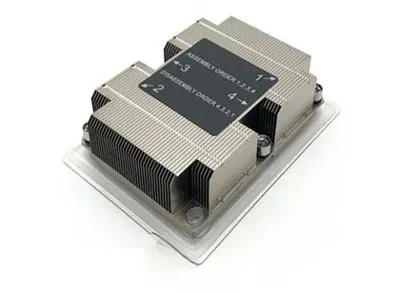
With the continuous development of electronic technology, photovoltaic inverter has made great progress in heat dissipation. The technology and of relevant heatsink manufacturers are constantly updated and developed. More and more heatsink and thermal solutions with higher heat dissipation efficiency have appeared one after another, such as aluminum profile radiator, copper aluminum composite radiator, liquid cooling plate radiator, etc.

Cavity management
The devices most easily affected by temperature in the inverter are operational amplifiers, sensors, electrolytic capacitors, etc. inductors, cables, power switches, etc. are relatively high-temperature resistant. The heating components can be separated by cavity separation method, and the power of heating components, such as inductors, can be placed outside the inverter to reduce the temperature in the chassis.
At the same time, the integral shell structure can be adopted, and the radiator is directly and closely connected with the shell, so that the aluminum alloy shell can dissipate heat through two paths, so as to reduce the temperature of components and the internal temperature of inverter, and ensure the longer service life of components and inverter.

Thermal simulation:
The thermal condition of the system can be truly simulated by using the simulation software, and the working temperature value of each component can be predicted in the design process. In this way, the unreasonable inverter structure layout can be corrected, so as to shorten the design R & D cycle, reduce the cost and improve the primary power of the product.

Heatpipe assembly technology:
Heat pipe is a new type of heat transfer element with high thermal conductivity. It transfers heat through the evaporation and condensation of liquid in the fully closed vacuum pipe. It uses the fluid principle such as gross absorption, and the radiator of heat pipe can play a good refrigeration effect. It has the characteristics of high thermal conductivity, good isothermal, arbitrary change of heat transfer area on both sides of cold and hot, long-distance heat transfer, controllable temperature and so on.