Research progress of thermal interface materials
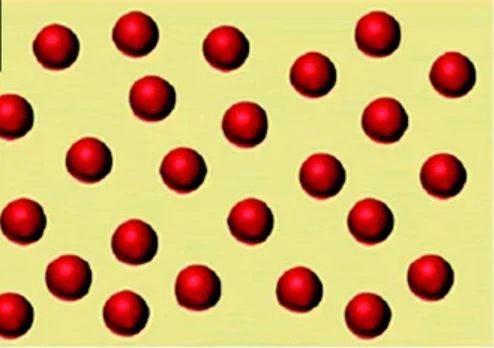
Thermal interface materials are mainly composed of thermally conductive fillers and polymers. The addition of thermally conductive filler improves the thermal conductivity of the polymer, while retaining the polymer's good flexibility, low cost, and easy processing and molding advantages. The thermal conductivity of the thermal interface material depends on the filler fraction. When the filler fraction is insufficient, the dispersed individual particles cannot come into contact with adjacent particles (Figure 5(a)), and the thermally conductive particle network cannot be formed. When the filler fraction reaches a certain level (percolation threshold), a continuous thermal network begins to form (Figure 5(b)), so that the thermal conductivity of the polymer composite will increase exponentially.
However, how to prepare a thermal conductivity of more than 20 W/mK and an interface thermal resistance value of less than 0.01 Kcm2/W is still a huge challenge. In response to this difficulty, under the funding of the National Key R&D Program-Strategic Advanced Electronic Materials Key Special Project, led by researcher Sun Rong, Shenzhen Institute of Advanced Technology, Chinese Academy of Sciences, and Shanghai Jiaotong University, Southeast University, Tongji University, and Suzhou Nano, Chinese Academy of Sciences The Institute of Technology and Nano-Bionics, Ningbo Institute of Materials, Chinese Academy of Sciences and Shanghai University have carried out molecular design of high-performance thermal interface materials, micro-nano-scale measurement of interface thermal resistance, and calculation and simulation of acoustic-electronic coupling mechanism at the interface to develop high-performance Thermal interface material. On this basis, the prepared thermal interface material is applied to high power density electronic devices, and its typical application in high power density electronic devices is verified.
Ceramics also have high thermal conductivity and excellent electrical insulation, which is especially suitable for areas requiring electrical insulation. Among the ceramic fillers that have been reported, boron nitride (BN) has very high thermal conductivity and is becoming the most attractive research object in thermal management applications. In 2017, Zhang et al. prepared the h-BN membrane in time by vacuum filtration, and infiltrated the water-soluble polymer polyvinyl alcohol into the h-BN to form a h-BN/polyvinyl alcohol composite material. The preparation process is shown in Figure 6(a). When the content of h-BN is 27 vol%, the maximum in-plane and out-of-plane thermal conductivity can reach 8.44 W/m·K and 1.63 W/m·K, respectively (Figure 6(b)). In addition, Yu et al. prepared h-BN/thermoplastic polyurethane composites using vacuum hot pressing. When the h-BN content is 95 wt%, the in-plane thermal conductivity of the composite material is as high as 50.3 W/m·K, which is consistent with the results reported by Fu et al.
Metals have high intrinsic thermal conductivity due to the use of electrons as heat carriers, and have become a commonly used thermally conductive filler for thermal interface materials. For example, Xu et al. used the electrodeposition method to prepare a highly oriented Ag thermally conductive network. The thermal interface material prepared by it has a thermal conductivity of 30.3 W/m·K, which is much higher than the polymer composite prepared by the random dispersion method (1.4 W /m·K). Wang et al. found that under the same filler content (0.9 wt%), copper nanowires have a higher ability to improve the thermal conductivity of polymers than silver nanowires. In addition, how to reduce the interface thermal resistance between the metal and the polymer is very important. Improving the modification of organic molecules or inorganic fillers on the metal surface can increase the interaction force between the metal and the polymer, and then reduce the interface between the metal and the polymer. Thermal resistance, improve the thermal conductivity of polymer composites. In addition, Jeong et al. recently introduced the concept of liquid metal filler in the PDMS matrix in order to create a thermoelastic body with high thermal conductivity, elasticity and stretchability. There is another important research direction of metal-based thermal interface materials—continuous metal-based thermal interface materials. For example, Sn-Ag-Cu based alloys or Sn-Bi can be used as standard lead-free solders in electronic packaging, and are often used as thermal interface materials. Its advantages are high thermal conductivity, low interface thermal resistance, High reliability and low cost. Liquid metal is a thermal interface material that has attracted much attention in recent years. Its main component is metallic gallium (Ga) and its alloys. It has the advantages of low melting point, good wettability with chips, and low interface thermal resistance. However, how to prevent it from overflowing is the biggest problem and challenge for liquid metal-based thermal interface materials.