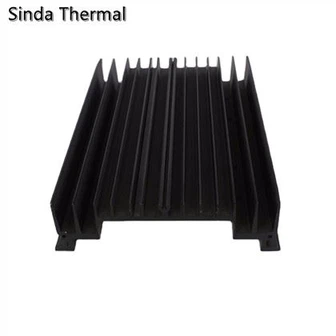
RTX 3090 Thermal solutions
Since its inception, the RTX30 series graphics cards have served countless game players and content creators, especially high-end graphics cards that unleash powerful GPU performance in complex scenarios. However, heat dissipation is also a concern for users. Firstly, we need to understand the composition of the graphics card heat sink. Currently, most graphics cards in the market use air-cooled Thermal solutions, and the most obvious sign is the fan of the graphics card body, which is the characteristic of air-cooled graphics cards. However, fans are only one of the components of air cooling heatsink, and heat pipes and fins are mainly responsible for conducting heat, playing a crucial role in heat dissipation.

Heatpipe and cooling fins:
The higher the specification of the chipset, the higher the heat generated under high load conditions, so the more heat pipes are required. The heat pipe plays an important role in the heatsink. The heat pipe contains a variable phase coolant inside. After coming into contact with the GPU heat source, the coolant will absorb heat and evaporate into gas through the variable phase principle, and then diffuse to the cold end at the other end. The variable phase liquid flows back to the heat source through the "sintered wall" inside the heat pipe, thus circulating and transferring heat.
Another important component that shares the heat conduction function with the heat pipe is the fins. One end of the heat pipe contacts the GPU core, while the other end is interspersed with a large number of regular fins, aiming to increase the area of the cold zone. The heat source uses heat pipes to transfer heat to the fins, and then the fan accelerates the air circulation, achieving the effect of heat dissipation. Therefore, fans, heat pipes, and fins play a complementary role and cooperate with each other.

Whether it is a heat pipe or a fin, the purpose is to transfer heat from the heat source. So how does the GPU core come into contact with the heat pipe? At present, most graphics cards adopt a direct contact solution with a copper base, where the heat from the core is transferred to the copper base and then to the heat source and fins. Although simple and reliable, the cooling efficiency has always been limited. In the face of today's high demand from users, especially the powerful flagship GPU, the heat dissipation efficiency of copper bottomed direct contact has always been limited.

At present, a more excellent thermal solution is to use VC heat sinks. This solution uses vacuum cavity components, which have extremely low thermal resistance values, 50% of copper, resulting in higher heat dissipation efficiency. VC technology adopts a flat vacuum compressed flat sealed cavity, which has the same principle as a heat pipe. The cavity is orderly arranged with "independent capillary structures", and the gaps between the structures flow condensate. Compared to traditional copper bottoms, it can greatly improve heat dissipation efficiency.

As a top tier graphics card, the RTX 3090 can meet the application needs of all scenarios. Whether you are pursuing a gaming experience with 8K ultra high resolution or a productivity application focused on content creation, it can provide excellent user experience for high-end players. There is no need to worry about the heat generated under high loads. Efficient themral management technology, combined with vapor chamber, heat pipes and fins, achieves efficient heat conduction and heat dissipation.