

Several common cooling solutions for charging piles
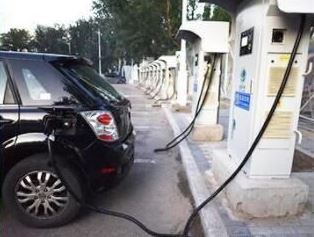
Compared with other power sources, the system heat dissipation of the charging pile is much larger, and the requirements for the thermal design of the system are extremely strict. The power range of DC charging piles is 30KW, 60KW and 120KW, and the efficiency is generally around 95%, so 5% of it will be converted into heat loss, and the heat loss will be 1.5KW, 3KW and 6KW. For outdoor equipment, this heat must be discharged outside the equipment, otherwise it will accelerate the aging of the equipment. At the same time, it needs to be waterproof and dustproof to prevent short circuit of electronic equipment and signal disturbance.
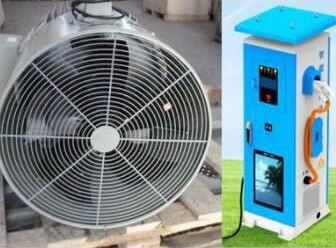
There are currently four commonly used cooling modes: natural cooling (mainly relying on heat sinks), forced air cooling, water cooling, and air conditioning. Due to factors such as volume, cost, reliability, etc., most companies currently use forced air cooling for processing. Then, this is bound to bring interference such as dust, corrosive gas, and moisture. The heat dissipation of the charging pile is divided into two parts: module heat dissipation and the overall heat dissipation of the chassis. Because the charging module is built in, the protective measures are mainly reflected in the design of the chassis. The simplest and most economical design is to make the air inlet and outlet of the box into a louver type, and then add a fan to the air outlet to extract the heat from the module fan.
This method can play a certain protective role, and dust and moisture will inevitably enter over time. If you want a better protection effect, you can use a closed cold and heat isolation air duct to isolate the internal cold and heat. The partition plate separates the cold and hot fluids. The heat conduction carrier and the top fan are used to efficiently cool down. The air inlet and outlet at both ends use shutters. The filter group is effective against water and dust.
The working principle of the heat-conducting carrier: the heat-conducting carrier is composed of a tube shell, a liquid absorbing core, an end cap and a fin. The capillary porous material of the absorbent core close to the inner wall of the tube is filled with liquid and then sealed. One end of the tube is the evaporation section (heated section), and the other end is the condensing section (cooling section). According to application needs, an adiabatic section can be arranged between the two sections. When one end of the heat pipe is heated, the liquid in the wool core evaporates and vaporizes, and the steam flows to the other end under a slight pressure difference to release heat and condenses into a liquid. The liquid flows back to the evaporation section along the porous material by capillary force. In this way, heat is transferred from one end of the tube to the other end. And there is a top fan to take away the heat.


natural cooling air conditioning cooling
forcing air cooling liquid cooling


