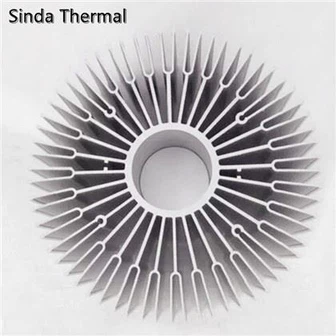
Talking about which heat dissipation method is better for automotive LED headlights?
Regarding the question of "Which method of heat dissipation is better for automotive LED headlights?" people have different views and opinions, now let's talking about this subject.
At present, there are three main thermal methods used in automotive LED headlights on the market. To clarify which design method is better, it must be considered separately from various aspects such as using scenarios, installation space, and using habits.
Let me first talk about how many ways are there to dissipate heat from automotive LED headlights?
1. Heat sink (sheet) heat dissipation This is an early LED production scheme. There is only one heat sink for heat dissipation, no fan, and no heat dissipation copper tape. The advantage is simple structure and low cost, but the disadvantage is that the heat dissipation effect is poor and the performance is not stable. Now it is rarely used;

2. Copper tape thermal method uses braided copper strips for cooling. Because copper strips can be folded and bent, the installation is relatively simple, and the installation space requirements are not high. This is an advantage; but the disadvantages are: poor heat dissipation, poor performance, and light decay Relatively fast, the power decays faster, and the power decays, and the brightness is down. This is why the brightness of the LED headlights that use copper tape to dissipate the light will slowly decrease after 20 to 30 minutes.

3. heat sink + fan cooling heat sink plus fan, radiator cooling is passive cooling, fan cooling is active cooling, combining the two together, on the same LED headlight, double cooling, multiple effects, this is the most effective heat dissipation methods for automotive LED headlights so far.