

The Current Situation and Development Trend of 3D VC heatsinks
A VC (vapor chamber )heat sink is a cooling device used to effectively dissipate heat from electronic components or other heat sources. It is a passive thermal management system that operates based on the principles of phase change and thermal conduction. VC heat sinks are usually used in high heat flux applications, such as high-performance computing, consumer electronics, power electronics, high-power laser equipment, etc. The vapor chamber heatsink provides more uniform temperature distribution through efficient phase change heat transfer through VC.
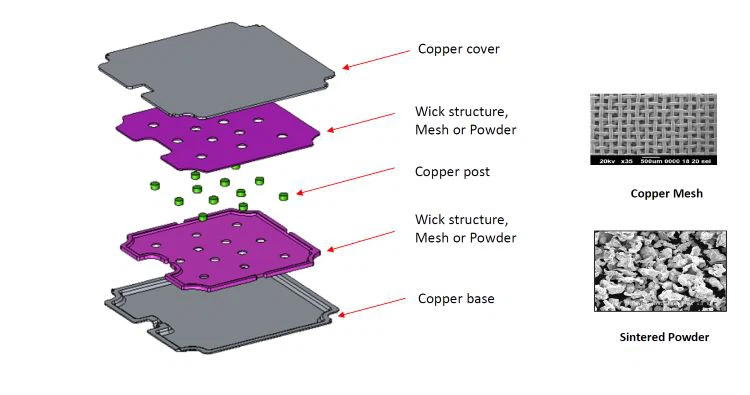
The 3D VC radiator evolved from a flat VC radiator has a special design base plate and shares a steam space with the vertical condensing tube (heat pipe). It is made by brazing multiple open heat pipes onto the VC with corresponding holes. The 3D VC is in direct contact with the heat source, evenly dissipating heat along the XY plane, and strengthening heat transfer to the fins through vertical heat pipes. The vertical thermal conductivity tube enhances the speed of phase change heat transfer, so the thermal conductivity of 3D VC is higher than that of planar VC of the same size design.
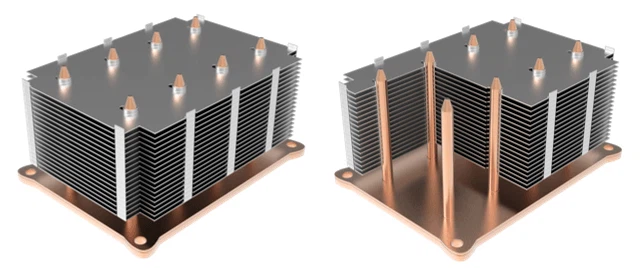
In the field of high-performance computing, 3D VC heat sinks have been widely used in high-performance workstations and AI servers. In 2016, HP was facing the cooling challenge of increasing workstation CPUs from 95W to 140W (Intel Xeon E5-1680 v3). Therefore, HP has configured Staggered Hex Fin 3D VC heat sinks on the HP Z440 and HP Z840 workstations, significantly reducing cooling fan noise while maintaining a lightweight chassis design (30% reduction in noise on the HP Z440 and 25% reduction in noise on the HP Z840).
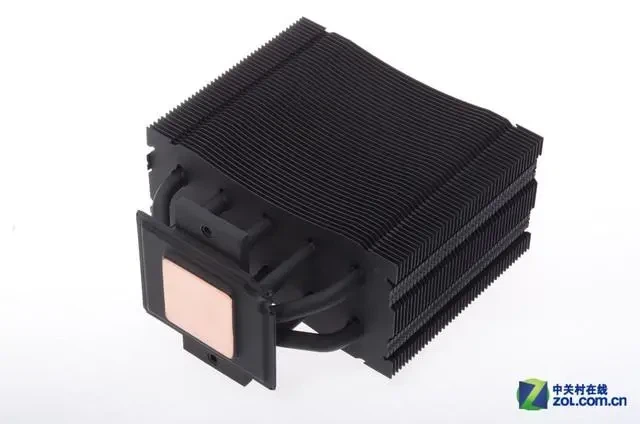
In recent years, with the popularity of AI applications such as big data models and ChatGPT, the demand for AI servers has skyrocketed. According to TrendForce, a market research firm, AI server shipments will increase at a compound annual growth rate of 10.8% from 2022 to 2026. In 2023, AI servers will grow by 38% to 1.2 million units. The demand for AI chip cooling has become the largest potential market for 3D VC. Nvidia's AI servers are equipped with at least 6 to 8 GPU chips, and in addition to using flat vapor chamber , high-end models are also equipped with 3D VC heat sinks.
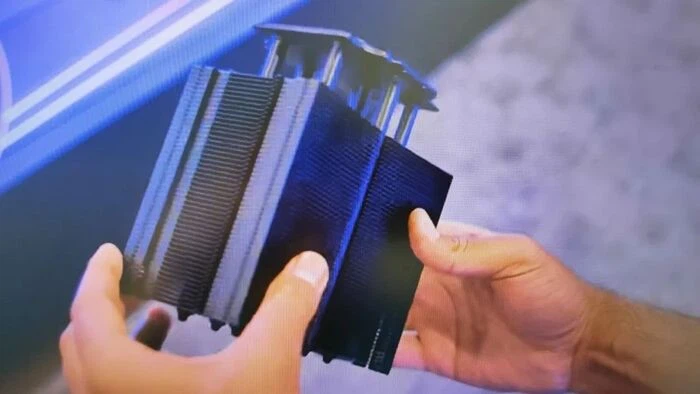
Intel will address the challenge of using two-phase immersion cooling by optimizing 3D VC to more effectively dissipate heat. 3D VC is combined with innovative boiling enhanced coatings to promote nucleation site density and reduce thermal resistance.
Unlike welding the heat pipe onto the condenser surface of a flat VC, MSI plans to use a 3D VC thermal solution for graphics cards to meet the flattening requirements of graphics card heat sinks. By directly exchanging heat with more fins through the heat pipe, the cooling performance of the radiator is improved.


