The effect of cooling fins
Regarding the design of the heat dissipation module of a notebook, the thicker the diameter of the heat pipe and the greater the number, the higher the heat conduction efficiency will naturally be. However, in order to reduce the hot steam in the condensation section of the heat pipe to liquid in the shortest time, higher requirements are also put forward for the matched radiating fins.
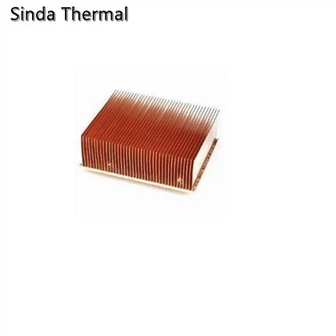
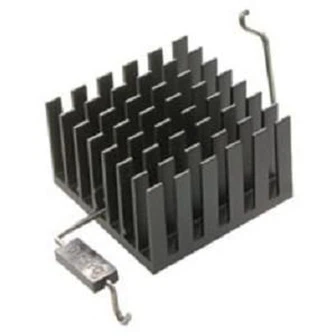
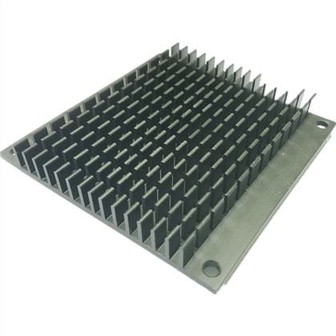
The heat dissipation fins are classified as "passive heat dissipation components" in the field of electronic engineering design. Its materials are mainly aluminum and copper. The working principle is to dissipate the heat transferred from the heat pipe in the form of convection. The heat dissipation efficiency is Depends on the size of the surface area.
As the current game books have started the "weight-loss competition", the heat dissipation fins can no longer increase the surface area through the thickness, and can only be improved by increasing the length or number of the heat dissipation fin modules and increasing the density of the heat dissipation fin blades. NS.
It should be noted that, except for a few notebooks with fanless designs that pursue the ultimate in thinness and lightness, cooling fins cannot exist independently. A set of cooling fins must correspond to a cooling fan and a corresponding cooling air outlet.
The reason is simple. For notebooks equipped with 15W or higher TDP processors, the heat dissipation fins cannot satisfy the heat emitted from the chip. The fan must be driven away by cold air sucked in from the outside!